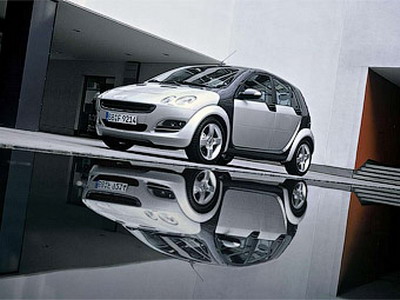
Smart has launched a special edition of what’s probably the most eco-friendly internal combustion car on sale.
The lightshine is based on the fortwo passion cdi turbodiesel coupé with softip transmission, which produces just 86 g/km of CO2. That means it qualifies for a 100% discount on the London Congestion Charge, as well as £0 road tax. Fuel economy is pretty impressive too, with a combined cycle rating of 85.6 mpg (3.3 l/100km).
There’s not too much to differentiate the lightshine, though. Apart from the light green matt body panels, it gets colour coded headlamp bezels, LED daytime running lights, special badging and the double spoke alloys borrowed from the pulse trim level. The interior is spruced up with a new 3-spoke steering wheel, paddleshift gear change and floor mats that feature a lightshine logo.
The downside? Smart has priced the lightshine at £11,405, which is £765 more than a passion coupé currently costs. Some might feel that it’s not worth paying such a premium for the special version, especially considering that the spec isn’t too dissimilar.
Otherwise, it’s the usual fortwo issues: Carrying more than two people is obviously impossible, performance from the 53 bhp (40 kW / 54 PS) diesel engine is best described as leisurely, and the automatic gearbox has been criticised in the past.
But the lightshine will certainly be exclusive, with only 86 - a nod to its CO2 emissions - destined to come to the UK.
Showing posts with label Smart. Show all posts
Saturday, January 15, 2011
Saturday, January 8, 2011
Zero Congestion Charge
In a rare piece of good news for motorists, the beginning of 2011 saw a change to the London Congestion Charge that could see some drivers now (legally) avoiding the fee altogether.
The new Greener Vehicle Discount, which replaces the Alternative Fuel Discount, means that more cars will potentially qualify for 100% off the daily charge.
Naturally, there are a couple of caveats that come attached with this generous gesture from Transport for London.
The first is that the vehicle needs to be ‘green’. More precisely, it should be Euro 5 emissions compliant and produce 100 grams of CO2 per kilometre or less.
Secondly, if you already own such an eco-friendly machine, don’t presume that you can just swan about in central London and not worry about the Congestion Charge. To receive the Greener Vehicle Discount, a car must first be registered with Transport for London, and that involves a £10 annual payment.
So, what cars will qualify for the Greener Vehicle Discount? According to the Vehicle Certification Agency, the models that currently meet the criteria are:
It’s worth bearing in mind that Transport for London has committed to review the Greener Vehicle Discount in the future, so that eventually only vehicles emitting 80 g/km or less qualify. This tweak will be introduced ‘when the time is right’, but the first reassessment of the discount has been confirmed for 2012.
And finally, the area covered by the Congestion Charge is now much smaller, following the scrapping of the Western Extension zone on 4th January 2011:
Related posts:
Congestion Charge change
London Congestion Charge
The new Greener Vehicle Discount, which replaces the Alternative Fuel Discount, means that more cars will potentially qualify for 100% off the daily charge.
Naturally, there are a couple of caveats that come attached with this generous gesture from Transport for London.
The first is that the vehicle needs to be ‘green’. More precisely, it should be Euro 5 emissions compliant and produce 100 grams of CO2 per kilometre or less.
Secondly, if you already own such an eco-friendly machine, don’t presume that you can just swan about in central London and not worry about the Congestion Charge. To receive the Greener Vehicle Discount, a car must first be registered with Transport for London, and that involves a £10 annual payment.
So, what cars will qualify for the Greener Vehicle Discount? According to the Vehicle Certification Agency, the models that currently meet the criteria are:
| Manufacturer | Model | Specification | Transmission | Fuel | CO2 g/km |
|---|---|---|---|---|---|
| Audi | A3 | 1.6 TDI 105PS Stop Start | M5 | Diesel | 99 |
| Citroën | DS3 | 1.6HDi 90hp w/ energy saving tyres | M5 | Diesel | 99 |
| Citroën | New C3 | 1.6HDi 90hp Airdream+ | M5 | Diesel | 99 |
| Fiat | 500 / 500C (2010 on) | TwinAir | M5 | Petrol | 95 |
| Fiat | 500 / 500C (2010 on) | TwinAir Dualogic | SAT5 | Petrol | 92 |
| Fiat | Punto Evo (Jan 2010 on) | 1.3 16v MultiJet 85 ECO | M5 | Diesel | 95 |
| Ford | Fiesta (Post 2010¼) | 1.6 Duratorq 95PS +DPF ECO | M5 | Diesel | 98 |
| Hyundai | i10 | 1.0l SOHC | M5 | Petrol | 99 |
| Mini | Hatchback | One D w/ DPF | M6 | Diesel | 99 |
| Mini | Hatchback | Cooper D w/ DPF | M6 | Diesel | 99 |
| Seat | Ibiza | ST 1.2 CR TDI 75PS Ecomotive | M5 | Diesel | 92 |
| Seat | Leon | 1.6 CR TDI 105PS Ecomotive | M5 | Diesel | 99 |
| Skoda | New Fabia Hatch | 1.2 CR TDI 75PS GreenLine II | M5 | Diesel | 89 |
| Skoda | New Fabia Estate | 1.2 CR TDI 75PS GreenLine II | M5 | Diesel | 89 |
| Skoda | New Fabia Estate | 1.2 TDI 3 cylinder 75PS GreenLine | M5 | Diesel | 89 |
| Smart | fortwo cabrio (MY 2011) | 54 bhp cdi w/ Softip & 15" rear wheels | 5 AMT | Diesel | 86 |
| Smart | fortwo cabrio (MY 2011) | 54 bhp cdi w/ Softouch & 15" rear wheels | 5 AMT | Diesel | 87 |
| Smart | fortwo cabrio (MY 2011) | 71 bhp mhd w/ Softip & 15" rear wheels | 5 AMT | Petrol | 99 |
| Smart | fortwo cabrio (MY 2011) | 71 bhp mhd w/ Softouch & 15" rear wheels | 5 AMT | Petrol | 100 |
| Smart | fortwo coupé (MY 2011) | 54 bhp cdi w/ Softip & 15" rear wheels | 5 AMT | Diesel | 86 |
| Smart | fortwo coupé (MY 2011) | 54 bhp cdi w/ Softouch & 15" rear wheels | 5 AMT | Diesel | 87 |
| Smart | fortwo coupé (MY 2011) | 71 bhp mhd w/ Softip & 15" rear wheels | 5 AMT | Petrol | 97 |
| Smart | fortwo coupé (MY 2011) | 71 bhp mhd w/ Softouch & 15" rear wheels | 5 AMT | Petrol | 98 |
| Toyota | iQ (MY 2011) | 1.0 VVT-i | M5 | Petrol | 99 |
| Toyota | Auris Hybrid (MY 2010) | T4 89g 1.8 VVT-i | E-CVT | Petrol Hybrid | 89 |
| Toyota | Auris Hybrid (MY 2010) | T4 1.8 VVT-i | E-CVT | Petrol Hybrid | 93 |
| Toyota | Auris Hybrid (MY 2010) | T Spirit 1.8 VVT-i | E-CVT | Petrol Hybrid | 93 |
| Toyota | Prius (MY 2009) | T4 1.8 VVT-I | E-CVT | Petrol Hybrid | 92 |
| Toyota | Prius (MY 2009) | T3 1.8VVT-I | E-CVT | Petrol Hybrid | 89 |
| Toyota | Prius (MY 2009) | T Spirit 1.8 VVT-I | E-CVT | Petrol Hybrid | 92 |
| Toyota | Prius (MY 2009) | T Spirit w/ Solar Panel 1.8VVT-I | E-CVT | Petrol Hybrid | 89 |
| Volkswagen | New Polo | 1.2 TDI 75PS BlueMotion | M5 | Diesel | 89 |
| Volkswagen | New Golf | 1.6 TDI 105PS BlueMotion | M5 | Diesel | 99 |
| Volvo | C30 (MY 2011) | DRIVe | M6 | Diesel | 99 |
| Volvo | C30 (MY 2011) | DRIVe | M6 | Diesel | 99 |
| Volvo | S40 (MY 2010) | DRIVe | M6 | Diesel | 99 |
| Volvo | S40 (MY 2011) | DRIVe | M6 | Diesel | 99 |
| Volvo | V50 (MY 2011) | DRIVe | M6 | Diesel | 99 |
| NB: Electric and plug-in hybrid cars aren’t eligible for the Greener Vehicle Discount - they have their own discount scheme. | |||||
It’s worth bearing in mind that Transport for London has committed to review the Greener Vehicle Discount in the future, so that eventually only vehicles emitting 80 g/km or less qualify. This tweak will be introduced ‘when the time is right’, but the first reassessment of the discount has been confirmed for 2012.
And finally, the area covered by the Congestion Charge is now much smaller, following the scrapping of the Western Extension zone on 4th January 2011:
Related posts:
Congestion Charge change
London Congestion Charge
Thursday, December 16, 2010
Nine electric cars get grant
The UK’s Department for Transport has announced the first nine models that will be eligible for its Plug-in Car Grant.
Beginning in January 2011, the scheme will see buyers able to claim 25% off the list price (up to a maximum of £5,000) per qualifying vehicle. The government has allocated £43M for the grants up until the end of March 2012, with a review of the programme’s viability beyond that date scheduled for January 2012.
The nine are:
Although it looks like there’ll be plenty for customers to choose from, the choice isn’t as wide as it first appears. The Peugeot and Citroën are essentially re-badged versions of the Mitsubishi, while the Ampera shares its underpinnings with the Volt.
Business Minister Mark Prisk said: “Today’s news that motorists will be able to choose from at least nine cars under the consumer incentive scheme… will further reinforce the message that the UK is Europe’s leading producer of ultra low carbon vehicles."
Unfortunately the last part of that particular statement shouldn’t be taken at face value just yet. The only model on the list that is definitely confirmed for UK production is the Nissan Leaf. However, domestic manufacturing will only start in 2013, with cars being imported from Japan until then.
Meanwhile, GM Europe has yet to decide whether the Vauxhall Ampera will be built at Ellesmere Port in England, but it has confirmed that the Ampera’s UK price will be £28,995 after the Plug-in car Grant has been applied.
A surprising inclusion is the Tata Vista EV, mainly because it’s an unknown quantity in the UK. Apparently it has been developed from the Indica Vista, the previous version of which was the basis for the almost universally unloved and derided CityRover.
Tata Motors European Technical Centre in Warwick has been involved in the project, and the rumour is that the Vista EV may be built in the UK. A location has yet to be disclosed so, unless there has been a lot of work going on behind the scenes, an on-sale date of March 2011 seems very optimistic unless the initial cars are going to be imported from India. And then there’s the slight issue of not having a dealer network to sell through. Maybe Tata will use the showrooms of its Jaguar and Land Rover subsidiaries?
Related posts:
Leaf is Car of the Year
US to get wider i-MiEV
SMMT Electric Car Guide
Mitsubishi i-MiEV costs
UK i-MiEV prices slashed
Electric car grants saved
PSA goes electric
The future’s electric
Beginning in January 2011, the scheme will see buyers able to claim 25% off the list price (up to a maximum of £5,000) per qualifying vehicle. The government has allocated £43M for the grants up until the end of March 2012, with a review of the programme’s viability beyond that date scheduled for January 2012.
The nine are:
| Manufacturer | Model | First UK Deliveries | Price |
|---|---|---|---|
| Mitsubishi | i-MiEV | January 2011 | £23,990 including grant |
| smart | fortwo electric drive | January 2011 | TBC. Available to lease in limited volumes from January 2011 ahead of full series production starting in 2012 |
| Peugeot | iOn | January 2011 | Only available via four year lease at £415 plus VAT per month |
| Nissan | Leaf | March 2011 | £23,990 including grant |
| Tata | Vista EV | March 2011 | TBC |
| Citroën | CZero | Early 2011 | Only available via four year lease at £415 plus VAT per month |
| Vauxhall | Ampera | Early 2012 | £28,995 including grant |
| Toyota | Prius Plug-in Hybrid | Early 2012 | TBC. Currently only available to lease in limited volumes |
| Chevrolet | Volt | Early 2012 | TBC |
![]() |
| smart fortwo electric drive |
Although it looks like there’ll be plenty for customers to choose from, the choice isn’t as wide as it first appears. The Peugeot and Citroën are essentially re-badged versions of the Mitsubishi, while the Ampera shares its underpinnings with the Volt.
![]() |
| Peugeot iOn |
Business Minister Mark Prisk said: “Today’s news that motorists will be able to choose from at least nine cars under the consumer incentive scheme… will further reinforce the message that the UK is Europe’s leading producer of ultra low carbon vehicles."
Unfortunately the last part of that particular statement shouldn’t be taken at face value just yet. The only model on the list that is definitely confirmed for UK production is the Nissan Leaf. However, domestic manufacturing will only start in 2013, with cars being imported from Japan until then.
Meanwhile, GM Europe has yet to decide whether the Vauxhall Ampera will be built at Ellesmere Port in England, but it has confirmed that the Ampera’s UK price will be £28,995 after the Plug-in car Grant has been applied.
![]() |
| Vauxhall Ampera |
A surprising inclusion is the Tata Vista EV, mainly because it’s an unknown quantity in the UK. Apparently it has been developed from the Indica Vista, the previous version of which was the basis for the almost universally unloved and derided CityRover.
![]() |
| Tata Indica Vista |
Tata Motors European Technical Centre in Warwick has been involved in the project, and the rumour is that the Vista EV may be built in the UK. A location has yet to be disclosed so, unless there has been a lot of work going on behind the scenes, an on-sale date of March 2011 seems very optimistic unless the initial cars are going to be imported from India. And then there’s the slight issue of not having a dealer network to sell through. Maybe Tata will use the showrooms of its Jaguar and Land Rover subsidiaries?
Related posts:
Leaf is Car of the Year
US to get wider i-MiEV
SMMT Electric Car Guide
Mitsubishi i-MiEV costs
UK i-MiEV prices slashed
Electric car grants saved
PSA goes electric
The future’s electric
Labels:
Chevrolet,
Citroen,
Mitsubishi,
Nissan,
Peugeot,
Politics and law,
Smart,
Tata,
Toyota,
Vauxhall
Monday, September 27, 2010
Smart and Mini scooters
Both Smart and Mini will have electric scooter concepts at the Paris Motor Show. That’s either a huge coincidence, or they’ve been keeping a very close eye on each other’s activities. Of course it must be the former, for the benefit of the lawyers.
Smart
Smart’s offering is called the escooter which, like the Smart fortwo car, features a metal frame with interchangeable plastic body panels.
Power comes from a 5 bhp (4 kW / 5 PS) rear hub-mounted motor, driven by a 48-volt lithium-ion battery pack. That’s enough to propel the escooter up to 28 mph (45 km/h), which is on a par with 50 cc petrol scooters and should be fine for most city centre trips. Tackling anything further afield might be a bit ambitious, although Smart reckons it’ll have a range of around 60 miles (100 km).
Charging takes ‘within three to five hours’, which just sounds rather vague. Unlike the Econogo Yogo electric scooter, the escooter doesn’t have a removable battery, which makes recharging awkward unless there’s a convenient kerbside plug-in point to hand.
Stopping ability is clearly one aspect of the escooter that has received a lot of attention. The brakes are linked - which means just one lever controls retardation of both the front and rear wheels - and they come with an anti-lock system, a rarity for scooters.
However, whereas there’s a traditional disc brake for the front wheel, the rear uses the electric motor acting in reverse to slow it down. An added benefit of this arrangement is that braking makes the motor act as a generator, sending extra charge to the battery.
If it ever goes on sale, riders of the escooter will also need to own a smartphone. That’s because putting the phone into a slot on the dashboard deactivates the immobiliser and anti-theft system. Then, when travelling, the phone’s screen becomes the scooter’s instruments, showing speed, battery range and charge level.
A clever idea, but it could all go very wrong the first time it rains and the owner discovers that their smartphone isn’t particularly waterproof.
Mini
Mini is claiming ‘CO2-free mobility’ for its Scooter E Concept. That’s somewhat misleading, unless the electricity used comes from a source that doesn’t produce any carbon dioxide during the generation process. Boringly pedantic, but unfortunately true.
Just like the Smart escooter, the Mini features an electric motor integrated in the rear wheel, combined with a lithium-ion battery. Charging is also via an onboard socket, so any potential buyers would probably have to invest in a few extension leads, too.
Disappointingly, that’s about it for technical information. Seemingly Mini has concentrated more on how its Scooter E Concept looks. Details such as the upright windshield and the round headlight are supposed to evoke the design of Mini cars, although it could be said that the result just ends up resembling a bloated Piaggio Vespa.
In yet another startling coincidence, the Scooter E Concept also makes use of smartphones. Like the Smart escooter, the rider would be expected to slot their phone into the dashboard to enable the bike to start. Once underway, the phone would control music, navigation and communication, using a Bluetooth link to a microphone and speakers in the rider’s helmet.
Doubtless Mini, like Smart, will be waiting to see what kind of reaction its concept gets before deciding whether or not to take it any further. Perhaps parent company BMW’s existing motorcycle operation gives the Mini Scooter E Concept a better chance of making it into production?
Smart
Smart’s offering is called the escooter which, like the Smart fortwo car, features a metal frame with interchangeable plastic body panels.
Power comes from a 5 bhp (4 kW / 5 PS) rear hub-mounted motor, driven by a 48-volt lithium-ion battery pack. That’s enough to propel the escooter up to 28 mph (45 km/h), which is on a par with 50 cc petrol scooters and should be fine for most city centre trips. Tackling anything further afield might be a bit ambitious, although Smart reckons it’ll have a range of around 60 miles (100 km).
Charging takes ‘within three to five hours’, which just sounds rather vague. Unlike the Econogo Yogo electric scooter, the escooter doesn’t have a removable battery, which makes recharging awkward unless there’s a convenient kerbside plug-in point to hand.
Stopping ability is clearly one aspect of the escooter that has received a lot of attention. The brakes are linked - which means just one lever controls retardation of both the front and rear wheels - and they come with an anti-lock system, a rarity for scooters.
However, whereas there’s a traditional disc brake for the front wheel, the rear uses the electric motor acting in reverse to slow it down. An added benefit of this arrangement is that braking makes the motor act as a generator, sending extra charge to the battery.
If it ever goes on sale, riders of the escooter will also need to own a smartphone. That’s because putting the phone into a slot on the dashboard deactivates the immobiliser and anti-theft system. Then, when travelling, the phone’s screen becomes the scooter’s instruments, showing speed, battery range and charge level.
A clever idea, but it could all go very wrong the first time it rains and the owner discovers that their smartphone isn’t particularly waterproof.
Mini
Mini is claiming ‘CO2-free mobility’ for its Scooter E Concept. That’s somewhat misleading, unless the electricity used comes from a source that doesn’t produce any carbon dioxide during the generation process. Boringly pedantic, but unfortunately true.
Just like the Smart escooter, the Mini features an electric motor integrated in the rear wheel, combined with a lithium-ion battery. Charging is also via an onboard socket, so any potential buyers would probably have to invest in a few extension leads, too.
Disappointingly, that’s about it for technical information. Seemingly Mini has concentrated more on how its Scooter E Concept looks. Details such as the upright windshield and the round headlight are supposed to evoke the design of Mini cars, although it could be said that the result just ends up resembling a bloated Piaggio Vespa.
In yet another startling coincidence, the Scooter E Concept also makes use of smartphones. Like the Smart escooter, the rider would be expected to slot their phone into the dashboard to enable the bike to start. Once underway, the phone would control music, navigation and communication, using a Bluetooth link to a microphone and speakers in the rider’s helmet.
Doubtless Mini, like Smart, will be waiting to see what kind of reaction its concept gets before deciding whether or not to take it any further. Perhaps parent company BMW’s existing motorcycle operation gives the Mini Scooter E Concept a better chance of making it into production?
Saturday, June 26, 2010
Green Car Awards 2010
The Environmental Transport Association (ETA), a UK-based ethical motoring organisation and sustainable travel lobby group, has announced its 2010 Green Car Awards winners.
BMW took the honours in three of the nine categories. Toyota meanwhile won in two, plus its iQ was given the accolade of overall Green Car of the Year 2010. In deciding how the titles would be awarded, over 5,000 cars were assessed on their power, emissions, fuel efficiency and amount of noise produced.
The worst cars in each category were also named, with the Lamborghini Murcielago being declared the least-green car overall. Perhaps the LP 640’s 495 g/km of carbon dioxide emissions and combined cycle fuel consumption of 13.3 mpg (21.3 l/100 km) had something to do with it?
Some of the results seem a bit odd, though. For example, the winning Toyota iQ (presumably the entry level 1.0 VVT-i Manual) seems to be bettered in a number of key criteria by the car that (possibly) inspired it - the Smart fortwo.
According to the ETA’s own data, this is how the iQ compares to the diesel-engined fortwo:
* Smart actually quotes 86 g/km.
** Figure is combined hydrocarbons and oxides of nitrogen.
On the basis of those figures, the Smart would appear to be the much ‘greener’ car, unless the extra hydrocarbons and particulates its diesel engine produces are considered really harmful? However, there were plenty of other diesel cars that won their categories, so it would seem that argument doesn’t really stand up.
Apart from that, there are some models mentioned that are no longer produced (for instance the V6-powered Volkswagen Golf and the AMG version of Mercedes-Benz’s R-Class). And it seems that the greenest off-roader prize has gone to the whole of the BMW X1 range, rather than an individual model. Notwithstanding the issue that anyone contemplating taking an X1 off-road would need to be very adventurous (and have a proper off-roader on standby to rescue them shortly afterwards), there’s quite a difference in fuel consumption and emissions between the rear-wheel drive and all-wheel drive versions.
So, perhaps the results need to be viewed with a degree of circumspection but, for what it’s worth, here is the list of the ETA Green Car Awards 2010 winners and losers:
BMW took the honours in three of the nine categories. Toyota meanwhile won in two, plus its iQ was given the accolade of overall Green Car of the Year 2010. In deciding how the titles would be awarded, over 5,000 cars were assessed on their power, emissions, fuel efficiency and amount of noise produced.
The worst cars in each category were also named, with the Lamborghini Murcielago being declared the least-green car overall. Perhaps the LP 640’s 495 g/km of carbon dioxide emissions and combined cycle fuel consumption of 13.3 mpg (21.3 l/100 km) had something to do with it?
Some of the results seem a bit odd, though. For example, the winning Toyota iQ (presumably the entry level 1.0 VVT-i Manual) seems to be bettered in a number of key criteria by the car that (possibly) inspired it - the Smart fortwo.
According to the ETA’s own data, this is how the iQ compares to the diesel-engined fortwo:
| Measure | iQ 1.0 VVT-i | fortwo cdi turbodiesel coupé |
|---|---|---|
| Combined cycle consumption | 4.3 l/100km / 65.7 mpg | 3.3 l/100km / 85.6 mpg |
| Fuel cost over 12,000 miles | £930 | £720 |
| CO2 g/km | 99 | 88* |
| Carbon monoxide g/km | 0.15 | 0.174 |
| Hydrocarbons g/km | 0.03 | 0.246** |
| Oxides of nitrogen g/km | 0.02 | 0.224 |
| Particulates g/km | N/A | 0.021 |
* Smart actually quotes 86 g/km.
** Figure is combined hydrocarbons and oxides of nitrogen.
On the basis of those figures, the Smart would appear to be the much ‘greener’ car, unless the extra hydrocarbons and particulates its diesel engine produces are considered really harmful? However, there were plenty of other diesel cars that won their categories, so it would seem that argument doesn’t really stand up.
Apart from that, there are some models mentioned that are no longer produced (for instance the V6-powered Volkswagen Golf and the AMG version of Mercedes-Benz’s R-Class). And it seems that the greenest off-roader prize has gone to the whole of the BMW X1 range, rather than an individual model. Notwithstanding the issue that anyone contemplating taking an X1 off-road would need to be very adventurous (and have a proper off-roader on standby to rescue them shortly afterwards), there’s quite a difference in fuel consumption and emissions between the rear-wheel drive and all-wheel drive versions.
So, perhaps the results need to be viewed with a degree of circumspection but, for what it’s worth, here is the list of the ETA Green Car Awards 2010 winners and losers:
| Category | Best | Worst |
|---|---|---|
| Green Car of the Year 2010 | Toyota iQ | Lamborghini Murcielago |
| Greenest small family car | Honda Insight 1.3 | Volkswagen Golf 3.2 V6 |
| Greenest large family car | BMW 320d Touring | Vauxhall Insignia VXR V6 Turbo |
| Greenest supermini | Toyota Yaris 1.4 D-4D | Renault Clio Sport 200 |
| Greenest city car | Toyota iQ | Fiat Panda 1.4 100HP |
| Greenest sports car | Vauxhall Tigra | Lamborghini Murcielago |
| Greenest MPV | Peugeot Bipper Tepee | Mercedes-Benz R63 AMG |
| Greenest small MPV | Renault Modus 1.5dci | Vauxhall Zafira VXR 2.0i Turbo |
| Greenest off-road car | BMW X1 E84 | Mercedes-Benz ML63 AMG |
| Greenest luxury car | BMW 740d | Bentley Brooklands |
Labels:
BMW,
Lamborghini,
Motor industry,
Smart,
Toyota
Tuesday, March 23, 2010
The complete set of stylish accessories for Fortwo
Stickers by Timo Wuerz for Smart
Variants of stickers — six, all of them are thought up by artist Timo Wuerz who worked together with Mercedes-Benz Accessories GmbH. The company asserts, that stickers are capable to hold on on the car a minimum five years. Besides, they at any moment can be unstuck, not having left thus any traces on a body. Cost of stickers: 250 euros.Interior of Fortwo
Related Posts: Smart ForTwo
Sunday, March 21, 2010
Smart forfun2
Smart forfun2, 2006
Smart forfun2, 2006
Smart forfun2: The combination of two vehicles with cult status
The smart forfun, a smart forfour with monster truck ambitions, caused quite a stir at the Athens Motor Show in November 2005. Following the extremely positive response to this, the decision to develop a further vehicle with a similar character was a logical step.
Following the initiative of Mercedes-Benz Hellas, Stefan Attart (46), Greek Champion in 4x4 Rally Races had clear ideas: the new off-road vehicle should have the body of a smart fortwo. A suitable platform now had to be found.
Awakening the inner child
DaimlerChrysler has always had an unusually large range of off-road vehicles - from the M-Class to the G-model and the Unimog. One look at the smart forfun2 (pronounced smart for-fun to the second) and you see straightaway that it is based on a Mercedes-Benz Unimog 406 series.
This is what makes it so fascinating: the combination of two vehicles, each of which has achieved cult status in its respective segment. So it's no wonder that the smart forfun2 awakens the inner child in everyone who sees it.
Combining vehicle and platformBut first things first: once the platform for the smart forfun2 had been decided, in January of this year Stefan Attart started working on the first designs. It goes without saying that there's more to an off-road vehicle like this than simply screwing four wheels under a smart fortwo.
Based on technical drawings of both vehicles, a design was created that for the first time clearly showed the direction the new vehicle was to take. Stefan Attart laid down the design that was to connect the vehicle with the platform, and precise attachment points were defined on the axles and the chassis.
Oversized dimensionsThe engine and transmission were adopted from the Unimog. The OM 352, a six-cylinder diesel engine with a capacity of 5,675 cc, was given a prominent and clearly visible position on the front axle. It delivers 84 bhp - an impressive figure for the smart forfun2. The diesel version of the production car has a 41 bhp engine.
The dimensions also turn heads: tyres on 26 inch rims with a diameter of 140 cm. Not to mention ground clearance of 65 centimetres and an unbelievable total height of 3.7 metres.
Maximum off-road mobility
The designers wanted to give the smart forfun2 maximum off-road mobility - and the platform of the 406 offers optimum prerequisites for off-road driving. The off-road character is further emphasized by oversized wheels and the safety cage made of aluminium tubes.
To optimise the vehicle for off-road driving, in addition to special shock absorbers Stefan Attart fitted manually controlled air suspension. This enables the driver to specifically influence individual springs - a particular advantage on extreme downhill gradients.
Uncompromising vehicle conceptEverything in one car that is sure to divide opinions - or boys from men. Two vehicles, which each represent an uncompromising vehicle concept in their respective environments, and yet remain unique. And this combination in the smart forfun2 is sure to cause even more controversy.
As with the real smart fortwo, some people are sure to find the concept of the smart forfun2 too radical, whilst others will love it - with not many opinions in-between. However running apart from the herd is probably the best prerequisite for achieving cult status.
Labels:
Smart
Tuesday, March 16, 2010
Smart forfun2
Smart forfun2

Smart forfun2: The combination of two vehicles with cult status
The smart forfun, a smart forfour with monster truck ambitions, caused quite a stir at the Athens Motor Show in November 2005. Following the extremely positive response to this, the decision to develop a further vehicle with a similar character was a logical step.
Following the initiative of Mercedes-Benz Hellas, Stefan Attart (46), Greek Champion in 4x4 Rally Races had clear ideas: the new off-road vehicle should have the body of a smart fortwo. A suitable platform now had to be found.
Awakening the inner child
DaimlerChrysler has always had an unusually large range of off-road vehicles - from the M-Class to the G-model and the Unimog. One look at the smart forfun2 (pronounced smart for-fun to the second) and you see straightaway that it is based on a Mercedes-Benz Unimog 406 series.
This is what makes it so fascinating: the combination of two vehicles, each of which has achieved cult status in its respective segment. So it's no wonder that the smart forfun2 awakens the inner child in everyone who sees it.
Oversized dimensionsThe engine and transmission were adopted from the Unimog. The OM 352, a six-cylinder diesel engine with a capacity of 5,675 cc, was given a prominent and clearly visible position on the front axle. It delivers 84 bhp - an impressive figure for the smart forfun2. The diesel version of the production car has a 41 bhp engine.
The dimensions also turn heads: tyres on 26 inch rims with a diameter of 140 cm. Not to mention ground clearance of 65 centimetres and an unbelievable total height of 3.7 metres.
Maximum off-road mobility
The designers wanted to give the smart forfun2 maximum off-road mobility - and the platform of the 406 offers optimum prerequisites for off-road driving. The off-road character is further emphasized by oversized wheels and the safety cage made of aluminium tubes.
To optimise the vehicle for off-road driving, in addition to special shock absorbers Stefan Attart fitted manually controlled air suspension. This enables the driver to specifically influence individual springs - a particular advantage on extreme downhill gradients.
Uncompromising vehicle conceptEverything in one car that is sure to divide opinions - or boys from men. Two vehicles, which each represent an uncompromising vehicle concept in their respective environments, and yet remain unique. And this combination in the smart forfun2 is sure to cause even more controversy.
As with the real smart fortwo, some people are sure to find the concept of the smart forfun2 too radical, whilst others will love it - with not many opinions in-between. However running apart from the herd is probably the best prerequisite for achieving cult status.
Labels:
Smart
Wednesday, March 3, 2010
Smart Roadster
Smart Roadster

Smart RoadsterThe Smart Roadster is a two-door microcar first introduced in 2003 by Smart GmbH. Unfortunately, sales of the Roadster and Roadster Coupé were far below expectations, resulting in a halt of production of both models in November 2005.
History
At the 1998 Paris Motor Show, the two-seat, 2.5-metre Smart City Coupe (later named Smart Fortwo) was launched. This was the beginning of a new car brand and one of the more radical vehicle concepts to hit the European market since the bubble cars of the 1950s. It was also the beginning of a difficult period for Smart. The City Coupe had stability problems that were uncovered only immediately prior to launch. These forced a package of alterations to be made that were both expensive and compromised the car’s handling, ride and gear shift. Public concerns over the car's stability, combined with Smart’s elitist marketing and the sheer radicality of the car’s design, proved damaging to initial sales. Production projections were slashed from 200k per year to 80k, close to disastrous for a new brand with just one product.
Design & DevelopmentUnder design director Jens Manske in autumn 1998, Smart's 14-strong design and engineering team began to sketch possible future Smart cars. They soon realised that the powertrain of the City Coupe was ideal for a small sports car, with a compact turbo engine driving the rear wheels via a sequential 6 speed gearbox.
Following Smart’s ‘reduce to the max’ philosophy and general innovative approach, a concept for a super compact, practical and pure sports car was generated. Two quarter-scale exterior and two quarter-scale interior models were made in February 1999 with Volker Leutz’s exterior and Christoph Machinek’s interior proposals selected for development into full-size development models. The design of the car had progressed considerably by the time Michael Mauer officially arrived from Mercedes Benz's Japan design center to take over Menske's position in May 1999. Mauer worked closely with the design team to quickly develop the roadster, with the intention now of producing a show car for the upcoming 1999 IAA motor show in Frankfurt.
By early 2000 the Smart City Coupe had finally started to gain sales momentum, with its cabrio version making a significant addition to total Smart sales. In March Mauer left Smart for Saab, succeeded by Hartmut Sinkwitz in May. As the third design director of Smart during the Roadster's development, Sinkwitz had to bring the concept to production in a very short time. This task may have been made somewhat easier by the Roadster having been designed from the start to use existing powertrain and other City Coupe components. Given some of the advanced design features, it is a credit to the design team that so much of the concept car made it to production.
Concept Car
The ‘Roadster Coupe’ as shown at the 2000 Paris motor show was already on its way to production form. It shared the design of the Roadster from the doors forward, but had a glass targa roof and rear structure resembling a very small estate (station wagon) in the same way as the BMW Z3 coupe and the Saab 9X concept car developed under Mauer at Saab a few years later.
Production versions of both Roadster and Roadster Coupe debuted together at the 2002 Paris Motor Show and were available to buy within a few months. Both cars were unique in the market, being significantly smaller that the Toyota MR2, MG TF, Fiat Barchetta and Mazda MX5, but offering similar performance and practicality to the base versions of these cars while significantly more fuel efficient.

Production
The Smart Roadster and Roadster Coupé were introduced in 2003, based on a stretched platform of the Fortwo (full length is 3427 mm). The two variants are meant to be reminiscent of the British roadster of yore, such as the Triumph Spitfire or the MG B. Both the Roadster and Roadster Coupé are available with a removable Targa roof or an electrical Softtop. The Roadster is powered by 45 or 60 kW (61 or 82 PS) versions of the turbocharged 3-cylinder engine in the rear, which is engineered by Mercedes Benz. The Roadster Coupé has only the more powerful 82 PS engine. A steering wheel with Formula 1-style gearpaddles, to control the semi-automatic sequential transmission, is optional. With weight as low as 790 kg, it is meant to provide the emotion of driving a sports car at an affordable cost. Still, the Roadster's price is not very far from that of a Fiat Barchetta or Mazda MX-5.
Both the Roadster and Roadster Coupé are available in Brabus-tuned versions with power increased to 74 kW (101 PS). The Brabus versions have a different twin sports exhaust, lower suspension, polished six-spoke aluminum alloy Monoblock VI 17" wheels, front spoiler, side skirts and radiator grille. Exclusive Brabus interior includes leather trimmed dashboard, alloy-effect accent parts, instrument graphics, leather/aluminium gearknob, aluminium handbrake handle, aluminium pedals and Brabus labeled floor mats.
Labels:
Smart
Saturday, October 17, 2009
Brabus has shown the variant of electromobile Smart
Brabus Ultimate R
Power of three-cylinder turbo-engine OEM have increased to 112HP/82,4 kw at 5750rpm. Twisting moment — 150Nm for 3900rpm. Dispersal to 100 km/h for 9,5 seconds. The maximum speed — 170 km/h. The car have equipped with the new sports suspension bracket underestimated on 30 mm, and more rigid gas shock-absorbers.The car has received carbon details both inside, and outside, and also the updated exhaust system. Besides, Brabus Ultimate R equip with an automatic transmission, navigating system, radio and the climate control.
Smart ForTwo
Related Posts: Smart ForTwo
Friday, August 21, 2009
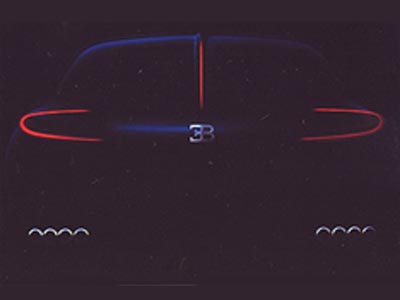
Bugatti has prepared three conceptual variants of new model

On Tuesday company Bugatti has officially confirmed the information appearing earlier on a debut on automobile in Frankfurt the conceptual version of new model.
Thus, as the head of firm Franz-Josef Paefgen has declared in interview to edition Autocar, this car will be only one of three variants prepared Bugatti for display to clients and gathering of their responses.Besides it, Paefgen has denied hearings that Bugatti will be constructed on a platform of sedan Bentley Mulsanne which is the successor of model Arnage and for the first time has been presented last week at festival Pebble Beach Concours d'Elegance. "New model Bugatti has absolutely other sizes and other concept. In general, it is difficult even to find any similarities with Bentley. Besides, Bugatti it was developed as the exclusive car with volume of release no more than 150 pieces, therefore for this car absolutely other materials and technologies" will be used, — has declared Paefgen.
As it was informed earlier, new model Bugatti will receive the same engine, as supercar Veyron, namely: eight-litre motor W16 with four turbines, developing 1001 horsepower. It is expected, that to "hundred" such car can be dispersed approximately for 3 seconds, and the maximum speed will make 402 km/h.
Tuesday, August 4, 2009
Mercedes-Benz will borrow a platform for new "Smart" at Renault

Company Mercedes-Benz plans to enter into the partner agreement in which frameworks Germans will receive a platform for working out of car Smart ForFour of following generation with firm Renault.
It is expected, that this model will receive the front-wheel chassis of compact hatchback Twingo and will rise on the conveyor in 2013. On it informs magazine Autocar referring to not named high-ranking sources in Mercedes-Benz.The novelty will receive the steel body which length will make no more than 3600 mm, width — 1700mm, and height — 1500mm. At present the detailed information on forthcoming cooperation, including given about, whether will be Mercedes-Benz and Renault to exchange engines and transmissions, yet it is not informed. However it is expected, that within the limits of partnership in a ruler and that and other mark there will be new petrol and diesel motors of small volume, in particular three-cylinder units which are already developed by "Mercedes". Creation of electric version Smart ForFour in which technologies of company Renault will be applied is besides, planned.
Officially about the partnership conclusion between Mercedes-Benz and Renault, and also about details of this cooperation and preparing projects, the head of concern Daimler will inform in September on autoshow in Frankfurt. In the same place will inform on strategy of development of "Smarts" in the future. According to some information, in the nearest some years for brand Smart will be created at least three new models.
The first Smart ForFour has appeared in 2004 and has been developed in cooperation with Japanese company Mitsubishi — the car has been constructed on the basis of hatchback Colt. Car manufacture has stopped all in two years because of low demand.
Related Posts: Renault
Sunday, July 26, 2009
Smart ForTwo have added playfulness
The German motor-car manufacturer has declared, that power of diesel version Smart Fortwo is increased 2010 modelling years by 21%. Now the 3-cylinder 44-strong motor develops 54 h.p. and 130 Nm. The modernised engine accelerates the car to first "hundred" for 17 seconds
Despite an increase in hallows, the average expense of fuel will please still the owner. In the mixed cycle on 100 km of a way of minipenalties consumes 3.4 l, and the indicator of emission СО2 does not exceed 88 g/km, is spoken in the press release. Smart Fortwo 2010 modelling years the colour display has received system hands-free, and also.
In Germany the novelty is on sale all on €200 more expensively, than the car 2009 modelling years.
Related Posts: Smart ForTwo
Monday, July 6, 2009
Review: 2009 Smart ForTwo
The Smart ForTwo isn't for shy people. Even though Smart USA has sold about 30,000 of these tiny two-seaters in the U.S., the little rollerskate attracts a lot of attention. On the road or in America's parking lots, the ForTwo is a conversation piece, and people don't hesitate to come up and talk to you. Some will tell you about the Smart they saw in Europe. Others will ask if it has the guts to make it onto the highway. Most will assume it gets great gas mileage (it doesn't). But one thing's for certain, during our week with the ForTwo, there was a 100-percent conversation rate wherever we went. Anthropophobes, be warned.
Among the myriad of questions we received, the most common area of concern centered around how safe it is. That's a fair question, considering the bigger-is-better message we've heard for years. But when you're in the Smart, you don't question its safety, you just drive. Granted, there's a slight feeling of vulnerability on the road – particularly when caught in the wind wake of semi trucks – but thanks to a deep dashboard and a distant leading edge to the windshield, the ForTwo feels bigger than it is, and about as solid as anything else on the road the majority of the time. It's only when you stop and think about the tiny narrow box you're cruising in that things get worrisome.
Still, the ForTwo has a full compliment of airbags and other active and passive safety features, and the National Highway Traffic Safety Administration gave the ForTwo a four-star crash rating for the driver (three stars for the passenger), so it's hardly a death trap. Instead, it's a fun but flawed little ride, at home neither in the city nor on the highway.
It's easy (and maybe justifiable) to criticize the ForTwo. "It's only half a car," one friend joked, and the love-it-or-hate-it styling and size is the most obvious hurdle to ownership. But after driving the Smart ForTwo Passion cabrio in a variety of environments, the fog of novelty wears off and the truth is revealed: there's no ideal environment for this ultracompact runabout.
If you're a commuter in an urban area and only plan to use the ForTwo as a means to get to and from work, you could make a case for the Smart. And yes, the ForTwo could serve as a road trip machine – in a pinch. And yes, its eight cubic feet. of cargo space (12 if you fill it to the roof) is enough for a light grocery run – just don't put your ice cream at the bottom of the bags, because the ForTwo's adequate 70-hp, 1.0-liter three-cylinder sits between the rear wheels and quickly heats up the rear cargo area for insta-milkshakes. But as an everyday vehicle, the Smart ForTwo fails to stack up. And it begins with the transmission.
Although the ForTwo's automated manual gearbox has been "improved" from the 2008 model, it's still an unforgivable mess. There are two shifting options: a full automatic mode and a manual option that allows the driver to use either the steering wheel-mounted paddles or the floor-mounted shifter to change gears sans clutch. In automatic mode, the changes are inexcusably jerky, especially between first and second. Using the paddles allows for a slightly smoother shift when deftly manipulating the throttle, but manual shifting doesn't feel particularly useful, as it only allows you to choose when the hiccups happen and does little to alleviate the (neck) pain.
As you'd expect, this puts a serious chink in the ForTwo's urban armor. While its size is great for parking and the little car zips in and out of traffic with ease, in city driving, where the transmission is most active, the constant shifting makes low- to mid-speed maneuvers a torturous affair. While it might be possible to learn to live with the lurches, our week with the ForTwo wasn't enough – and we doubt any amount of time could dull the discomfort.
After answering the most common queries (What is it? Who makes it? Is it electric?), the next inevitable and justifiable question is about fuel economy. Again, the ForTwo has a surprisingly hard time justifying itself here. We averaged 35.7 mpg during our week with the car, just under the EPA's official 36 mpg combined rating. Initially, we left shifting duties to the ForTwo's computer-controlled tranny, resulting in a 32.7 mpg average. When we decided to stick the Smart Cab into the manual mode and use the paddle shifters, we managed 38.8 mpg. Maybe they're not so useless after all?
From the driver's seat, the ForTwo does its best imitation of a sleek, modern desk in some hipper-than-thou graphic designer's office. The top of the dash is expansive, and the designers completely nailed a chic, Euro-feel with the colors and layout. Virtually unchanged since the 2008 model, the gauges are stylish yet easy to read. The mid-mounted tachometer is a necessity in manual mode, since it's difficult to hear the engine crying for a change if the radio is on. The tachometer works better than the built-in indicator that flashes an "up" or "down" arrow below the speedometer when it's time to shift, as the LCD indicator is the same color and shape as the gear display and blends in. A separate colored icon, similar to what's found in modern VWs, would have been a better choice.
Other usability issues? While the visors provide an acceptable amount of shading through the windshield, they're practically useless when the glare comes in at anything beyond 11 and one o'clock. Rear visibility provided by the inside mirror isn't great, but works – except when the top is down. Two buttons by the shifter allow you to automatically fit or retract the Passion Cabriolet's top at any speed, eliminating any feeling of separation between the occupant and the environment. But when your enjoying the open-air experience, it's best to perform multiple checks when backing up or doing a lane change, as visibility becomes a finite resource. Thankfully, the ForTwo's squat footprint allows you to slide into spaces with a minimum of butt-puckering.
It's also easy to enjoy the Passion's standard audio system, which comes with a six-disc changer and an auxiliary jack in hidden in the glove box. The location of the input jack is great when you're on the road, as the iPod remains safely tucked away, but it's not so hot when stopping and starting. More than once, we left the player running because we forgot it was in the lockable glove box.
The sticker of our tester came in at $16,990, but the line ranges from $11,990 for the Pure Coupe to $20,990 for the BRABUS Cabriolet. Low sales in 2009 have prompted Smart USA to offer its first ever incentive for buyers, but even with a lower sticker, the ForTwo is difficult for us to recommend. Although some of its drawbacks disappear when you're enjoying the "ForTwo Experience", its abysmal transmission, general lack of utility and fuel economy that comes off as unimpressive for its size doesn't make a compelling case for the ForTwo. That is, unless you're a casual city driver who values fashion over function, or someone who really likes to meet new people.
[Source: Autoblog]
Subscribe to:
Posts (Atom)