Showing posts with label McLaren. Show all posts

Tuesday, February 15, 2011

MP4-12C versus 458 Italia

With a price tag of £168,500 in the UK, €200,000 in the Eurozone and $229,000 in the US, there was only ever going to be one car that the McLaren MP4-12C would be compared against: the incredibly talented, £173,132 Ferrari 458 Italia.


So, what’s the verdict? Judging by the reviews in Autocar, Evo and Car, McLaren has succeeded in eclipsing the Ferrari, thanks to an innovative chassis and usable performance from its 3.8 litre twin-turbo engine. The MP4-12C’s looks might have received some criticism for not being dramatic enough, but it’s still a very attractive design.


On paper the McLaren also has the upper hand, boasting more power, lighter weight, faster acceleration, a higher top speed and lower emissions:


McLaren MP4-12C versus Ferrari 458 Italia
Parameter MP4-12C 458 Italia
Engine
Capacity (litres) 3.8 4.5
Cylinders V8 V8
Power (bhp / kW / PS) 592 / 441 / 600 @ 7,000 rpm 570 / 425 / 577 @ 9,000 rpm
Torque (Nm / lb/ft) 600 / 443 @ 3,000 - 7,000 rpm 540 / 398 @ 6,000 rpm
Transmission
Gearbox 7-speed dual clutch 7-speed dual clutch
Performance
Acceleration (0-62 mph (100 km/h) seconds) 3.3 (3.1 with Corsa tyre option) 3.4
Top speed (mph / km/h) 205 / 330 202 / 325
Efficiency
Combined cycle (mpg (UK) / l/100km) 24.2 / 11.7 21.2 / 13.3
CO2 emissions (g/km) 279 307
Dry weight (kg / lbs) 1,336 / 2,945 1,380 / 3,042


McLaren Automotive has released videos of its MP4-12C undergoing virtual testing at the McLaren Technology Centre, as well as it being driven during the recent media test drive event at the AutodrĂ³mo Internacional do Algarve, Portugal. The journos were also treated some properly quick laps with Jenson Button behind the wheel, something that not all of them seemed to enjoy as much…


Related posts:

McLaren MP4-12C GT3

458 Italia wrecked

Spec a McLaren MP4-12C

Friday, January 28, 2011

Monday, January 3, 2011

McLaren F1 GTR, 1995

McLaren F1 GTR, 1995

 
Built at the request of race teams, such as those owned by Ray Bellm and Thomas Bscher, in order to compete in the BPR Global GT Series, the McLaren F1 GTR was a custom built race car which introduced a modified engine management system that increased power output — however, air-restrictors mandated by racing regulations reduced the power back to 600 hp (447 kW) at 7500 RPM. The cars extensive modifications included changes to body panels, suspension, aerodynamics and the interior. The McLaren F1 GTR would go on to take its greatest achievement with 1st, 3rd, 4th, 5th, and 13th places in the 1995 24 Hours of Le Mans, beating out custom built prototype sports cars.

In total, nine McLaren F1 GTRs would be built for 1995.

McLaren F1 GTR '96
To follow up on the success of the McLaren F1 GTR into 1996, McLaren further developed the '95 model, leading to a size increase but weight decrease. Nine more F1 GTRs were built to 1996 spec, while some 1995 cars were still campaigned by privateers. McLaren F1 GTR '96 chassis #14R is notable as being the first non-Japanese car to win a race in the All-Japan Grand Touring Car Championship (JGTC). The car was driven by David Brabham and John Nielsen. The weight was reduced with around 100 kg from the 1995 GTR edition and the engine was kept detuned at 600 HP to comply with racing regulations.

McLaren F1 GTR '97
With the F1 GT homologated, McLaren could now develop the McLaren F1 GTR for the 1997 season. Weight was further reduced and a sequential transaxle was added. The engine was slightly destroked to 6.0L instead of the previous 6.1L. Due to the heavily modified bodywork, the McLaren F1 GTR '97 is often referred to as the "Longtail" thanks to the rear bodywork being extended to increase rear downforce. A total of ten McLaren F1 GTR '97s were built. The weight was reduced to a total of 910 kg.

McLaren F1, 1993

McLaren F1, 1993


 The McLaren F1 is a sports car designed and manufactured by Gordon Murray and McLaren Automotive. On March 31, 1998, it set the record for the fastest production car in the world, 240 mph (391 km/h). As of April 2009, the McLaren F1 is succeeded by three faster cars in sheer top speed, but is still the fastest naturally aspirated production car.

The car features numerous proprietary designs and technologies. It is lighter and has a more streamlined structure than even most of its modern rivals and competitors despite having one seat more than most similar sports cars, with the driver's seat located in the middle. It features a powerful engine and is somewhat track oriented, but not to the degree that it compromises everyday usability and comfort. It was conceived as an exercise in creating what its designers hoped would be considered the ultimate road car. Despite not having been designed as a track machine, a modified race car edition of the vehicle won several races, including the 24 Hours of Le Mans in 1995, where it faced purpose-built prototype race cars. Production began in 1992 and ended in 1998. In all, 106 cars were manufactured, with some variations in the design.

Chief engineer Gordon Murray's design concept was a common one among designers of high-performance cars: low weight and high power. This was achieved through use of high-tech and expensive materials like carbon fibre, titanium, gold, magnesium and kevlar. The McLaren F1 was the first production car to use a carbon-fibre monocoque chassis.

The idea was first conceived when Murray was waiting for a flight home from the fateful Italian Grand Prix in 1988; Murray drew a sketch of a three seater sports car and proposed it to Ron Dennis, pitched as the idea of creating the ultimate road car, a concept that would be heavily influenced by the Formula One experience and technology of the company and thus reflect that skill and knowledge through the McLaren F1.

Engine
Gordon Murray insisted that the engine for this car be naturally aspirated to increase reliability and driver control. Turbochargers and superchargers increase power but they increase complexity and can decrease reliability as well as introducing an additional aspect of latency and loss of feedback, the ability of the driver to maintain maximum control of the engine is thus decreased. Murray initially approached Honda for an NA powerplant with 550 bhp (410 kW; 560 PS), 600 mm (23.6 in) block length and a total weight of 250 kg (551 lb), it should be derived from the Formula One powerplant in the then-dominating McLaren/Honda cars.

When Honda refused, Isuzu, then planning an entry into Formula One, had a 3.5 V12 engine being tested in a Lotus chassis. The company was very interested in having the engine fitted into the McLaren F1. However, the designers wanted an engine with a proven design and a racing pedigree.

The final result is a custom-built 6.1 L (6064 cc) 60-degree V12 with an aluminium alloy block and head, 86 mm (3.4 in) x 87 mm (3.4 in) bore/stroke, quad overhead camshafts for maximum flexibility of control over the four valves per cylinder and a chain drive for the camshafts for maximum reliability, the engine is dry sump. At 266 kg (586 lb), the resulting engine was slightly heavier than Murray's original maximum specification weight of 250 kg (551 lb) but was also considerably more powerful than he had specified. The bespoke engineered engine for the McLaren F1 is called the BMW S70/2.

The carbon fibre body panels and monocoque required significant heat insulation in the engine compartment, so Murray's solution was to line the engine bay with a highly efficient heat-reflector: gold foil. Approximately 25 g (0.8 ounce) of gold was used in each car.

The road version used a compression ratio of 11:1 to produce 627 hp (468 kW; 636 PS) at 7400 rpm—considerably more than Murray's specification of 550 horsepower (404 kW). Torque output of 480 ft·lb (651 N·m) at 5600 rpm. The engine has a redline rev limiter set at 7500 rpm.

In contrast to raw engine power, a car's power-to-weight ratio is a better method of quantifying acceleration performance than the peak output of the vehicle's powerplant. The standard McLaren F1 achieves 550 hp/ton (403 kW/tonne), or just 3.6 lb/hp. Compare with the Ferrari Enzo at 434 hp/ton (314 kW/tonne) (4.6 lb/hp), the Bugatti Veyron at 530.2 hp/ton (395 kW/tonne) (4.1 lb/hp), and the SSC Ultimate Aero TT with an alleged 1003 hp/ton (747.9 kW/tonne) (2 lb/hp).

The cam carriers, covers, oil sump, dry sump, and housings for the camshaft control are made of magnesium castings. The intake control features twelve individual butterfly valves and the exhaust system has four Inconel catalysts with individual Lambda-Sond controls. The camshafts are continuously variable for increased performance, using a system very closely based on BMW's VANOS variable timing system for the BMW M3; it is a hydraulically-actuated phasing mechanism which retards the inlet cam relative to the exhaust cam at low revs, which reduces the valve overlap and provides for increased idle stability and increased low-speed torque. At higher RPM the valve overlap is increased by computer control to 42 degrees (compare 25 degrees on the M3) for increased airflow into the cylinders and thus increased performance.

To allow the fuel to atomise fully the engine uses two Lucas injectors per cylinder, with the first injector located close to the inlet valve - operating at low engine RPM - while the second is located higher up the inlet tract - operating at higher RPM. The dynamic transition between the two devices is controlled by the engine computer.

Each cylinder has its own miniature ignition coil. The closed-loop fuel injection is sequential. The engine has no knock sensor as the predicted combustion conditions would not cause this to be a problem. The pistons are forged in aluminium.

Every cylinder bore has a nikasil coating giving it a high degree of wear resistance.
From 1998 to 2000, the Le Mans-winning BMW V12 LMR sports car used a similar S70/2 engine.

Chassis and body
The McLaren F1 was the first production road car to use a complete carbon fiber reinforced plastic (CFRP) monocoque chassis structure. Aluminium and magnesium was used for attachment points for the suspension system, inserted directly into the CFRP.

The car features a central driving position - the driver's seat is located in the middle, ahead of the fuel tank and ahead of the engine, with a passenger seat slightly behind and on either side. The doors on the vehicle move up and out when opened, and are thus of the type butterfly doors.

The engine produces high temperatures under full application and thus cause a high temperature variation in the engine bay from no operation to normal and full operation. CFRP becomes mechanically stressed over time from high heat transfer effects and thus the engine bay was decided to not be constructed from CFRP.

Aerodynamics
The overall drag coefficient on the standard McLaren F1 is 0.32, compared with 0.36 for the faster Bugatti Veyron, and 0.357 for the current holder of the fastest car world record (as of 2008) - the SSC Ultimate Aero TT (in terms of top speed). The vehicle's frontal area is 1.79 square meters and the total Cx is 0.57. Due to the fact that the machine features active aerodynamics these are the figures presented in the most streamlined configuration.

The normal McLaren F1 features no wings to produce downforce (compare the LM and GTR editions), however the overall design of the underbody of the McLaren F1 in addition to a rear diffuser exploits ground effect to improve downforce which is increased through the use of two electric fans to further decrease the pressure under the car. A "high downforce mode" can be turned on and off by the driver. At the top of the vehicle there is an air intake to direct high pressure air to the engine with a low pressure exit point at the top of the very rear. Under each door is a small air intake to provide cooling for the oil tank and some of the electronics. The airflow created by the electric fans not only increase downforce, but the airflow that is created is further exploited through design, by being directed through the engine bay to provide additional cooling for the engine and the ECU. At the front, there are ducts assisted by an electric suction fan for cooling of the front brakes.

Suspension
Steve Randle who was the car's dynamicist was appointed responsible for the design of the suspension system of the McLaren F1 machine. It was decided that the ride should be comfortable yet performance oriented, however not as stiff and low as that of a true track machine, as that would imply reduction in practical use and comfort as well as increasing noise and vibration, which would be a contradictory design choice in relation to the former set premise - the goal of creating the ultimate road car.

From scratch the design of the McLaren F1 vehicle had strong focus on centering the mass of the car as near the middle as possible by extensive manipulation of placement of i.a. the engine, fuel and driver, allowing for a low polar moment of inertia in yaw. The McLaren F1 has 42% of its weight at the front and 58% at the rear, this figure changes less than 1% with the fuel load.

The distance between the mass centroid of the car and the suspension roll centre were designed to be the same front and rear to avoid unwanted weight transfer effects. Computer controlled dynamic suspension were considered but not applied due to the inherent increase in weight, increased complexity and loss of predictability of the vehicle.

Damper and spring specifications: 90 mm (3.5 in) bump, 80 mm (3.1 in) rebound with bounce frequency at 1.43 Hz at front and 1.80 Hz at the rear, despite being sports oriented these figures imply the rather soft ride and will inherently decrease track performance, but again, the McLaren F1 is not in concept nor implementation a track machine. As can be seen from the McLaren F1 LM, McLaren F1 GTR et al., the track performance potential is much higher than that in the stock McLaren F1 due to fact that car should be comfortable and usable in everyday conditions.

The suspension is a double wishbone system with an interesting design, i.a. that longitudinal wheel compliance is included without loss of wheel control, which allows the wheel to travel backwards when it hits a bump - increasing the comfort of the ride.

Castor wind-off at the front during braking is handled by McLaren's proprietary Ground Plane Shear Centre - the wishbones on either side in the subframe are fixed in rigid plane bearings and connected to the body by four independent bushes which are 25 times more stiff radially than axially. This solution provides for a castor wind-off measured to 1.02 degrees per G of braking deceleration. Compare the Honda NSX at 2.91 degrees per G, the Porsche 928 S at 3.60 degrees per G and the Jaguar XJ6 at 4.30 degrees per G respectively. The difference in toe and camber values are also of very small under lateral force application. Inclined Shear Axis is used at the rear of the machine provides measurements of 0.04 degrees per G of change in toe-in under braking and 0.08 degrees per G of toe-out under traction.

When developing the suspension system the facility of electro-hydraulic kinematics and compliance at Anthony Best Dynamics was employed to measure the performance of the suspension on a Jaguar XL16, a Porsche 928S and a Honda NSX to use as references.

Steering knuckles and the top wishbone/bell crank are also specially manufactured in an aluminium alloy. The wishbones are machined from a solid aluminium alloy with CNC machines.

Tyres
The McLaren F1 uses 235/45ZR17 front tyres and 315/45ZR17 rear tyres. These are specially designed and developed solely for the McLaren F1 by Goodyear and Michelin. The tyres are mounted on 17x9 inches and 17x11.5 inches cast magnesium wheels, protected by a tough protective paint. The five-spoke wheels are secured with magnesium retention pins.

The turning circle from curb to curb is 13 m (42.7 ft), allowing the driver two turns from lock to lock.

Brakes
The McLaren F1 features unassisted, vented and crossdrilled brake discs made by Brembo. Front size is 332 mm (13.1 in) and at the rear 305 mm (12.0 in). The calipers are all four-pot, opposed piston types, and are made of aluminium. The rear brake calipers do not feature any handbrake functionality, however there is a mechanically actuated, fist-type caliper which is computer controlled and thus serves as a handbrake.

To increase caliper stiffness the calipers are machined from one single solid piece (in contrast to the more common being bolted together from two halves). Pedal travel is slightly over one inch. Activation of the rear spoiler will allow the air pressure generated at the back of the vehicle to force air into the cooling ducts located at either end of the spoiler which become uncovered upon application of it.

Servo assisted ABS brakes were ruled out as they would imply increased mass, complexity and reduced brake feel; however at the cost of increasing the required skill of the driver.

Gordon Murray attempted to utilize carbon brakes for the McLaren F1, but found the technology not mature enough at the time; with one of the major culprits being that of a proportional relationship between brake disc temperature and friction—i.e. stopping power—thus resulting in relatively poor brake performance without an initial warm-up of the brakes prior to use. As carbon brakes have a more simplified application envelope in pure racing environments this allows for the racing edition of the machine, the McLaren F1 GTR, to feature ceramic carbon brakes.

Gearbox and miscellaneous
The standard McLaren F1 has a transverse 6-speed manual gearbox with an AP carbon triple-plate clutch contained in an aluminium housing. The second generation GTR edition has a magnesium housing. Both the standard edition and the 'McLaren F1 LM' have the following gear ratios: 3.23:1, 2.19:1, 1.71:1, 1.39:1, 1.16:1, 0.93:1, with a final drive of 2.37:1, the final gear is offset from the side of the clutch. The gearbox is proprietary and was developed by Weismann. The Torsen LSD (Limited Slip Differential) has a 40% lock.

The McLaren F1 has an aluminium flywheel that has only the dimensions and mass absolutely needed to allow the torque from the engine to be transmitted. This is done in order to decrease rotational inertia and increase responsiveness of the system, resulting in faster gear changes and better throttle feedback. This is possible due to the McLaren F1 engine lacking secondary vibrational couples and featuring a torsional vibration damper by BMW.

Interior and equipment
Standard equipment on the stock McLaren F1 includes full cabin air conditioning, a rarity on most sports cars and a system design which Murray again credited to the Honda NSX, a car he had owned and driven himself for 7 years without, according to the official McLaren F1 website, ever needing to change the AC automatic setting. Further comfort features included SeKurit electric defrost/demist windscreen and side glass, electric window lifts, remote central locking, Kenwood 10-disc CD stereo system, cabin access release for opening panels, cabin storage department, four lamp high performance headlight system, rear fog and reversing lights, courtesy lights in all compartments, map reading lights and a gold-plated Facom titanium tool kit and first aid kit (both stored in the car). In addition tailored, proprietary luggage bags specially designed to fit the vehicle's carpeted storage compartments, including a tailored golf bag, were standard equipment. Airbags are not present in the car.

All features of the McLaren F1 were according to Gordon Murray obsessed over, which included the interior. The metal plates fitted to improve aesthetics of the cockpit are claimed to be 20/1000s of an inch thick to save weight. The driver's seat of the McLaren F1 is custom fitted to the specifications desired by the customer for optimal fit and comfort; the seats are hand made from CFRP and covered in light Connolly leather. By design the F1 steering column can not be adjusted, however prior to production each customer specifies the exact preferred position of the steering wheel and thus the steering column is tailored by default to those owner settings; the same holds true for the pedals, which are not adjustable after the car has left the factory, but like the steering column the pedals are also tailored to each specific customer.

During its pre-production stage, McLaren commissioned Kenwood to create a lightweight car audio system for the car; Kenwood, between 1992 and 1998 used the McLaren F1 to promote its products in print advertisements, calendars and brochure covers. Each car audio system was especially designed to tailor to an individual's listening taste, however radio was omitted because Murray never listened to the radio.

Every standard McLaren F1 also has a modem which allows customer care to remotely fetch information from the ECU of the car in order to help aid in the event of a failure of the vehicle.

Purchase and maintenance
Only 106 cars were manufactured, 64 of which were the standard street version (F1), 5 were LMs (tuned versions), 3 were longtail roadcars (GT), 5 prototypes (XP), 28 racecars (GTR), and 1 LM prototype (XP LM). Production began in 1992 and ended in 1998. At the time of production one machine took around 3.5 months to make.

Up until 1998, when McLaren produced and sold the standard McLaren F1 models, they had a price tag of around 970 000 USD. The cars can sell for up to nearly twice that of the original price, due to the performance and exclusivity of the machine. They are expected to further increase in value over time.

McLaren M6GT, 1969

McLaren M6GT, 1969


The McLaren M6A was a racing car developed by driver Bruce McLaren and his Bruce McLaren Motor Racing team for their entry in 1967 Can-Am season. As a replacement for the team's M1Bs from 1966, the Chevrolet-powered McLaren M6A's improved design earned Bruce McLaren and his team their first of multiple Can-Am championships. After the McLaren M6A were replaced by the M8A in preparation for 1968, McLaren and technical partner Trojan developed the M6B which was sold to customers for use in Can-Am as well as other racing series.

The M6 name was later used in the development of a closed-cockpit sports car for the 24 Hours of Le Mans and known as the M6GT. The company's plan to homologate it for the FIA's Group 4 regulations was however never completed, and only a few M6GT prototypes were finished by McLaren and Trojan. Two M6GTs were later converted to road cars, one of which became Bruce McLaren's personal transport.

Development
Bruce McLaren gathered several designers to develop the McLaren M6A during the off-season in early 1967. Along with McLaren himself, Robin Herd, Gordon Coppuck, Tyler Alexander, and Don Beresford all worked on the layout of the McLaren M6A's chassis and bodywork. The car featured the first monocoque chassis constructed by McLaren, while the bodywork was specifically shaped to increase downforce suited for the Can-Am circuits. McLaren's team also expanded into engine development, creating a fuel injection system for their Chevrolet V8s. Another addition to the team was a new tire supplier, with Goodyear replacing Firestone in exchange for a testing and development program.

The first McLaren M6A was completed in spring 1967, and brought to the nearby Goodwood Circuit for testing. Bruce McLaren Motor Racing carried out over 2000 miles of testing at the circuit in preparation for the upcoming Can-Am season, tuning the car as well as gathering data for Goodyear's use. As two further McLaren M6A were completed, the team shipped the cars to North America to prepare for the opening race of the season. A final addition to the cars was a coat of orange paint. This new McLaren Orange color scheme would eventually become synonymous with Bruce McLaren and the team.

After the retirement of the McLaren M6A, McLaren entrusted Trojan with constructing duplicates which could be sold to customers. These M6Bs were nearly identical to the McLaren M6A but were sold without an engine. Several other M6Bs were also modified to fit closed-cockpit bodywork.

Racing history

The 1967 Can-Am season began in September at Road America. Bruce McLaren's M6A qualified on pole position with a new track record, while teammate Denny Hulme's car led once the race began. Although McLaren's car suffered an oil leak and failed to finish, Hulme was able to earn the car's first victory. The next two events had the team running away from the opposition, with Hulme and McLaren finishing first and second consecutively. The roles were however swapped over the next two races as it was McLaren who won on both occasions, but problems with Hulme's car allowed McLaren to take the lead in the points standings going into the final round. For the finale at the Stardust Grand Prix, problems with the Chevrolet motors led to blown engines and neither car reaching the finish. However, with their performance over the season, Bruce McLaren secured the 1967 Can-Am Challenge Cup, while Hulme was ranked second only three points behind.

As Bruce McLaren Motor Racing moved to developing the M8A, the M6Bs began to be delivered to customers for the 1968 season. Several of the McLaren M6A were also sold with Roger Penske purchasing one car for defending United States Road Racing Championship (USRRC) champion Mark Donohue. Donohue won several USRRC events that season and earned his second championship. Donohue also later won a race in Can-Am, beating the newer McLaren M8As. After the cancellation of the USRRC after 1968, the M6As and M6Bs continued to be used into the early 1970s but none were able to achieve victory against their newer competitors.

Monday, December 20, 2010

McLaren MP4-12C, 2011

McLaren MP4-12C, 2011


The McLaren MP4-12C is revealed as the first in a range of high-performance sports cars from McLaren Automotive, the independent car division based at the McLaren Technology Centre in Woking, England. The 12C, and future models within the range, will challenge the world's best sports cars, benefiting from the expertise and virtuosity of the McLaren Group.

Twenty years of sports car design, engineering and production combined with inspirational success in Formula 1 have driven Ron Dennis, McLaren Automotive Chairman, to announce his plans for the ultimate line-up of technology-led and customer-focused performance cars for the 21st century. The rules in the sports car world are about to be re-written.

Through a rich modern history, McLaren's automotive division has already built the world's most critically acclaimed supercar, the McLaren F1 (1993-1998) and the world's best-selling luxury supercar, the Mercedes-Benz SLR McLaren (2003-2009). McLaren Automotive now looks to the future with a new range of revolutionary sports cars.

At its heart, the McLaren MP4-12C features a revolutionary carbon fibre chassis structure, the Carbon MonoCell: the first time a car in this market segment is based around such a strong and lightweight racing car engineering solution and the first time any car has ever featured a one-piece carbon fibre structure.

This step change in sports car design means that the 12C introduces new standards not just in handling, ride and outright performance, but also safety, economy and practicality in an already competitive sector.

Martin Whitmarsh, Team Principal of McLaren's racing team highlighted the integral part that McLaren's motorsport and road car experience played in developing the 12C: "McLaren has for years offered a potent mix of race car and road car technologies. This combination of McLaren's performance heritage, and future demands on what is expected of high performance sports cars in the 21st century, gave us a head-start when we embarked on this project. The 12C, and future variants, draws on the spirit of Formula 1 and delivers real-world technological advances."

Inside out

The heart of the new car is the Carbon MonoCell. McLaren pioneered the use of carbon composite construction in the 1981 Formula 1 MP4/1 model and set a trend that all Formula 1 teams have followed. The company brought carbon fibre to road cars for the first time with the 1993 McLaren F1 and then built on this experience with a carbon fibre chassis and body on the SLR manufactured to the same exacting standards, but in higher volumes.

The 12C changes this by introducing the advantages of carbon composite - light weight, high strength and torsional rigidity, and longevity - to a more affordable sector through its revolutionary engineering as a one-piece moulding. Never before has a carbon fibre chassis been produced this way.

The 12C MonoCell not only brings dynamic benefits, but also offers fundamental engineering opportunities that form the basis of the car's unique character. It has been designed to allow a much narrower structure overall which in turn contributes to a more compact car that is easier to position on the road and more rewarding to drive.

Not only is the 12C unique in its class by offering carbon technology, it also has the highest specific power output as well as extraordinary power- and torque-to-weight ratios. Furthermore, the Proactive Chassis Control system offers groundbreaking handling and ride comfort while an intense focus on occupant packaging offers new levels of comfort and everyday usability.

Antony Sheriff explained. "With the 12C we are redefining the relationship between performance and practicality, as well as performance and efficiency, achieving leading positions in both. We have designed this car from the inside out. We have a saying in McLaren - 'everything for a reason' and the 12C will surprise people in many ways.

Pure McLaren

All the parts of the McLaren MP4-12C are bespoke and unique to this car. Everything from the engine right down to the tailor-made switches and buttons is pure McLaren: nothing has come from another manufacturer's parts bin.

The 12C is powered by a bespoke McLaren 'M838T' 3.8 litre, V8 twin-turbo engine producing around 600bhp, driving through a McLaren seven speed Seamless Shift dual clutch gearbox (SSG). It is targeting not only new standards for power and performance in its sector, but also class-leading fuel economy and CO2 emissions; supported by McLaren's experience of active aerodynamics to aid cooling, grip, handling and road holding.

Thorough engineering and market research led to concept development and a clear decision in favour of a mid-engined two door high performance sports car. Intensive work was carried out in the wind tunnel and the driving simulator to ensure that the new car would inherently have superb dynamic qualities.

Adding lightness

Weight is the enemy of performance in every area of car design. It affects acceleration, speed, handling, fuel consumption and CO2 emissions - everything. McLaren Automotive engineers pursued weight saving obsessively. 
 
For example:
    * The Carbon MonoCell not only reduces the weight of the structure but also allows for the use of much lighter weight body panels.
    * The close position of the driver and passenger allows a narrower, lighter body while giving improved visibility with a clearer perception of the car's extremities.
    * Brakes with forged aluminium hubs save 8 kg and weigh less than optional carbon ceramic brakes.
    * Lightweight exhaust pipes exit straight out the rear of the car, minimizing their length and weight.
    * Airflow-assisted Airbrake deployment dramatically reduces weight of the Airbrake activation system.
    * Small, compact downsized engine coupled to lightweight compact SSG minimizes vehicle length, weight and polar moment of inertia.
    * Significant weight was pared off the alloy wheels through intensive Finite Element Analysis of wall thicknesses.
    * The engine cooling radiators were mounted at the rear, as close to the engine as possible, to minimize the pipework, the fluids contained within them, and therefore weight. They were also mounted in car line to minimize vehicle width.

Design: everything for a reason

The McLaren MP4-12C design follows similar principles to McLaren's Formula 1 cars, and the legendary McLaren F1, where everything is for a reason and all lines, surfaces, and details are designed with a job in mind as much as styled. This ensures that the 12C communicates its engineering through its styling and will remain timeless as a piece of automotive design.

Frank Stephenson, McLaren Automotive Design Director: "Many sports cars and super cars present an 'in-your-face', 'look-at-me' image that can become wearing and boorish; the ultimate backhanded compliment becomes, "…it was of its time". Great design, however, is timeless and looks relevant years later. Take the McLaren F1 as an example. I hope that with the 12C we have produced a car that looks great today and will still look great in years to come."

The 12C's body has been styled to support sector-leading levels of downforce; downforce that then subsequently contributes to sector-leading levels of lateral grip and stability. Air flow has been manically managed to support all performance figures and light weight targets. For example, placing the radiators adjacent to the engine keeps the car narrow and reduces weight. However, this results in a huge challenge of ensuring ample air flow to the radiators. The result? The large side air scoops and integrated turning vanes that are dramatic, but purely functional. No larger or smaller than required.

The designer's challenge is to then take that styling purpose driven by engineering aspirations and add personality. That's why the air scoops resemble the McLaren logo in form, as do other features around the car.
Just two 'pure' lines flow round the car and, when combined with the integration of several dramatic convex and concave surfaces, present a car that looks compact, low and well proportioned.

The market opportunity for McLaren

The market for high performance sports cars has grown substantially since the turn of the century. McLaren divides the market into segments that encompass both more comfort-orientated GT cars and the hard-edged supercars for road and track use.

The 'core' segment runs from around £125,000 to £175,000 featuring such cars as the Ferrari 458, Lamborghini Gallardo, Porsche 911 Turbo, Bentley Continental GT and Aston Martin DB9. A second segment is the 'high' category with prices ranging from £175,000 to £250,000 and consists largely of front-engined GT cars such as Ferrari 599 GTB and Ferrari 612, with just one mid-engined contender, the Lamborghini Murcielago.

The final segment is the 'ultimate' group, a sector more or less initiated by the McLaren F1 in 1993 and now populated by a select group of cars including the Mercedes-Benz SLR McLaren, Bugatti Veyron, and cars from the likes of Pagani and Koenigsegg that followed legends such as the Porsche Carrera GT and Ferrari Enzo. In 2011, McLaren will bring technology and performance exclusive to this 'ultimate' sector into the 'core' segment.

Though the recent economic downturn has affected the performance car sector, just as it has the entire motor industry, McLaren Automotive believes that the 'core' segment's growth from 8,000 sales in 2000 to more than 28,000 in 2007 highlights the potential that exists and that it will soon return to at least 2007 levels.

McLaren Automotive will distribute the 12C and future models through a brand-new retail network in all global markets.

Exclusivity, exquisite design and a passionate focus on delivering a wonderful ownership experience will ensure that the small number of retailers around the world are taking on an attractive new brand. This approach will drive excellent customer service and a virtuous circle that retains McLaren customers and brings in new converts as the range expands.

McLaren MP4-12C - what's in a name?

The name of the new McLaren sports car is MP4-12C.
What does this signify? As one might expect at McLaren, everything has a purpose and the nomenclature is no exception.
    * 'MP4' has been the chassis designation for all McLaren Formula 1 cars since 1981. It stands for McLaren Project 4, resulting from the merger of Ron Dennis' Project 4 organisation with McLaren.
    * The '12' refers to McLaren's internal Vehicle Performance Index through which it rates key performance criteria both for competitors and for its own cars. The criteria combine power, weight, emissions, and aerodynamic efficiency. The coalition of all these values delivers an overall performance index that has been used as a benchmark throughout the car's development.
    * The 'C' refers to Carbon, highlighting the unique application of carbon fibre technology to the future range of McLaren sports cars.

The elements of this name represent everything that the McLaren MP4-12C stands for:
    * 'MP4' represents the racing bloodline
    * '12' represents the focus on complete performance and efficiency
    * 'C' represents the revolutionary Carbon MonoCell

A carbon fibre heart

Light weight and performance are defining philosophies at McLaren. But outright power alone is of little significance if a car's weight saps output or if that power is unmanageable and compromises the driving experience or results in unacceptable emissions.

Fundamentally, it is critical to keep weight as low as possible. Increased customer demands for safety and advanced features all mean that shaving weight is ever more difficult. However, at McLaren saving weight remains a passion and at the heart of the McLaren MP4-12C is a carbon fibre composite chassis: the Carbon MonoCell.

This revolutionary structure is the automotive version of a McLaren innovation that started with Formula 1 back in 1981 and delivers both weight savings and performance gains. It is a technology cascade in which McLaren brought carbon composite technology from the aerospace industry to make the MP4/1 F1 car, the first Formula 1 car to benefit from the strength, weight and safety of carbon fibre.

McLaren's Formula 1 carbon fibre technology then offered the company the opportunity of applying its expertise to road car applications. The first ever road car to be constructed of this material was the McLaren F1 produced in 1993, albeit in small numbers. The F1 was followed by the Mercedes-Benz SLR McLaren that also shared this rare expertise.

Only a handful of other cars in the market offer such technology today and all of them lie in the 'ultimate' segment. No manufacturer has brought the advantages of carbon composite technology to a more affordable sector of the market. But the 12C does, through engineering passion and a relentless pursuit of efficiency.

So, McLaren did it first with the F1, the world's fastest car for many years, then in the highest volume with SLR, which almost doubled the volume of the next highest produced carbon fibre-based high performance sports car by selling over 2,100 units. Now, through revolutionary one-piece moulding of the MonoCell, McLaren brings a carbon composite chassis down to the 'core' category, where currently only traditional metal structures are offered.

The advantages this technology brings are light weight, high torsional rigidity, a very strong safety cell, low perishability, ease of repair and extreme dimensional accuracy.

The 12C MonoCell weighs less than 80 kg. Carbon fibre contributes to the car's low overall weight and it forms the structural basis for the whole car. The tub's torsional rigidity is considerably stiffer than a comparable alloy structure.

This inherent lack of flex means the unique front suspension system, which is mounted directly onto the MonoCell, requires less compromise for flex of the suspension itself. Therefore, it is easier to develop the unique balance between fine ride and precise handling that McLaren has targeted. The MonoCell also offers greater occupant safety. It acts as a safety survival cell, as it does for a Formula 1 car.

Carbon composites do not degrade over time like metal structures that fatigue. One is able to get into a 15-year-old McLaren F1 and there is none of the tiredness or lack of structural integrity that afflicts traditional cars that have suffered a hard life. The 12C will feel as good as new in this respect for decades.

And in the event of an accident, the light weight aluminium alloy front and rear structures are designed to absorb impact forces in a crash and can be replaced relatively easily. Aluminium extrusions and castings are jig welded into the finished assembly and bolted directly to the MonoCell. Cars with full aluminium chassis use their structure to absorb and crumple on impact, which implies more fundamental damage (and expense) to the whole structure, including the passenger cell, in a major accident.

McLaren has pioneered a new carbon fibre production process that allows the MonoCell to be produced to exacting quality standards, in a single piece, in only four hours, compared to the dozens of carbon components (and dozens of production hours) that normally feature in a carbon fibre chassis structure. This naturally brings huge efficiency and quality benefits. The MonoCell project is managed by Claudio Santoni, McLaren Automotive Body Structures Function Manager.

Powertrain: pure McLaren

The McLaren MP4-12C is powered by a twin-turbocharged, 3.8 litre 90° V8 engine - the 'M838T'. This marks the start of a new era in 'core' segment sports cars - smaller capacity, lighter weight, higher efficiency and more economical power units. The engine has the highest specific power output in its segment which, when allied to its low weight carbon composite chassis, delivers exemplary power- and torque-to-weight ratios.

'M838T' is a unique McLaren power unit, developed specifically for the 12C. It is compact, lightweight, very stiff, and offers an uncompromising combination of very high performance and good driveability, with excellent economy and CO2 emission values.

Taking power and emissions in combination (measured by its horsepower to CO2 ratio), the 12C delivers its power at greater efficiency than any other car on the market with an internal combustion engine, including hybrids.

'M838T' features dual variable valve timing and produces around 600bhp and 600Nm of torque. A dry sump and flat plane crankshaft allow the engine to be placed extremely low in the chassis thereby lowering the centre of gravity and improving handling responses. It also features composite cam covers and intake manifolds, which reduce weight and heat transmission into the charge air, as well as Nikasil-coated aluminium liners for further weight reduction.

The McLaren engine revs to 8,500rpm, has quick transient throttle response and delivers its abundant torque throughout the rev range. A staggering 80 per cent of torque is available at below 2,000rpm, ensuring great driveability and no need to floor the throttle to deliver performance.

And it delivers a great soundtrack to highlight the engine's performance, flexibility and driveability. The sound of the engine has been thoroughly engineered through exhaust manifold design and tuning of the exhaust and intake systems to deliver a unique engine note.

The high level exhaust pipes exit through a mixing box, rather than a conventional and heavy silencer box. All parts of the exhaust system up to the mixing box feature sandwich layer heat-shielding that helps reduce heat from the engine bay. In just an 18mm gap, exhaust gas temperatures reduce from 900°C to 300°C.

The engine drives the rear wheels through two wet clutches and a McLaren-developed seven speed Seamless Shift dual clutch gearbox (SSG).

The Seamless Shift technology offers variable programmes ranging from 'normal' for road use and 'sport' for quicker changes still, right up to a lightning quick high performance mode. In addition an 'automatic' mode, 'launch control' and 'winter' modes can be selected, the latter changing all electronic functions to suit low friction conditions and delivering maximum driver aid and support. There is no traditional manual transmission offered; the two pedal layout offered further scope to create a narrow, and therefore light, car.

The 12C's SSG is a development on the automated and sequential manual gearboxes with paddle shifts that proliferate in the car market today. The character of the transmission will engage even experienced drivers with its responsiveness and its contribution to the whole dynamic package.

With minimal torque loss, there is none of the lurch, hesitation or unpredictability that characterise traditional automated-manual transmission systems.

Design of the SSG system was driven by a demanding mechanical package that not only reduced weight and improved dynamic control for the entire vehicle, but also delivered driver benefits.

It is lightweight and compact in design and positioned in exactly the best location. The input shaft lies very close to the output shaft to help position the entire powertrain low in the vehicle. Twin secondary shafts ensure any rear axle weight overhang is minimised and rear crash performance is uncompromised. The bespoke SSG is further complemented by an entirely new control system.

This obsessive attention to detail comes as second nature to McLaren, but is not just there to satisfy the engineers' passions. McLaren's designers have also engineered the system to work seamlessly with the driver.

The system reduces weight and benefits packaging targets, but also ensures that driving programmes and shift strategies take the driver's own inputs and uses them to directly control the engine's torque and speed to deliver performance, economy or comfort as requested.

Gears are changed using a Formula 1 style rocker shift that pivots in the centre of the steering wheel. It is actuated on either side of the steering wheel (pulling right changes up, pulling left down).
As with the McLaren Formula 1 car, a shift can be actuated either by pulling or by pushing on the rocker. The rocker moves with the steering wheel, rather than being mounted on the steering column, so that if a gearchange is needed while lock is being applied the driver does not have to fumble around to change gear.

The rocker itself incorporates an innovative feature created by McLaren engineers called Pre-Cog. The name stands for pre-cognition, literally 'foreknowledge'. The rocker on the 12C has two positions with a slightly different haptic (or feel) for each. The driver applies first pressure to the rocker and it informs the gearbox to get ready to swap ratios, thereby saving time - latency - between the message being sent and the gearbox being primed to act. The second pressure confirms that the gear should be changed and the torque handover is completed in milliseconds.

Chassis: Proactive control

The suspension for the McLaren MP4-12C breaks new ground, offering hitherto unseen levels of roll control and grip (an almost flat cornering attitude, depending on the programme selected).

Though such track-like responses would normally imply a rock-hard ride, the 12C delivers compliance and ride comfort more akin to an executive saloon car. The mix of occupant cosseting and sporting potential is truly unique. The 12C offers the driver both class-leading ride comfort and class-leading performance.
The whole chassis package produces not only a unique relationship between ride and handling, but also astonishing lateral grip and outstanding traction. The 12C is poised and balanced whether negotiating high or low speed corners, during direction changes, under heavy or light braking and on tightening or opening corners.

The trick behind blending such opposing objectives lies in the innovative Proactive Chassis Control system, uncompromised geometry, and weight distribution.

The suspension is based on double wishbones with coil springs. The dampers are interconnected hydraulically and provide adaptive responses depending on both road conditions and driver preference.
The Proactive system features adjustable roll control which replaces the mechanical anti-roll bars that have been a standard feature of road cars since time immemorial. It allows the car to maintain precise roll control under heavy cornering while decoupling the suspension in a straight line for excellent wheel articulation and compliance.

There are three suspension modes that are selected on the Active Dynamics Panel. As with the powertrain adjustment, there is a 'normal', a 'sport' mode and a high performance mode which adjusts numerous parameters in the system.

The powertrain packaging also contributes to the 12C's handling prowess.

The engine is mounted low down in order to lower the centre of gravity while the radiators are rear-mounted and reduce weight by saving on long piping to and from the engine (and the fluids they would hold). The value of rear-mounted radiators is key to the 12C's handling and balance. The more weight that can be concentrated within the wheelbase and towards the centre of gravity, the lower the polar moment of inertia, thereby improving corner turn in.

Another feature that helps the 12C to handle at a new level is a development of an electronic system used by McLaren's 1997 MP4/12 Formula 1 car, - Brake Steer. In essence, it is a system that brakes the inside rear wheel when the car is entering a corner too quickly to make the desired radius. Under normal circumstances the front would wash away wide of the apex the driver wants to touch: in other words, the car is in a state of understeer.

Brake Steer manages the tendency of a car to wash out and brings its nose back on line. It assesses the steering angle to determine the driver's intended course and applies the inside rear brake to increase yaw rate and resume the desired course.

The system works on acceleration out of a corner when the inside rear has a tendency to spin, allowing the driver to put power down more quickly. It controls what a limited slip differential would do and obviates the need for such a complex and heavy unit, thus saving more valuable kilos.

The standard brakes for the 12C reduce overall vehicle and unsprung mass. McLaren has developed a composite braking system that uses a forged aluminium bell that attaches to the cast iron disc. This solution maintained the excellent brake feel of a cast iron disc while saving 8 kg. Carbon ceramic brakes will be available as an option, offering fade-free braking performance during high performance driving, but the standard composite brake system is actually lighter than the larger carbon ceramic units.

The design of the standard cast alloy wheels (19" front, 20" rear) was driven by McLaren's light weight objectives: the light weight styling was agreed in concept, then the wheel was tuned using Finite Element Analysis to take a further 4 kg out of the wheels. Bespoke Pirelli tyres have been developed in conjunction with McLaren specifically for the 12C.
An array of electronic aids is fitted to the 12C that will assist and protect the less-experienced driver, or when conditions challenge even the best. These include ABS, ESP, ASR traction control, Electronic Brake Distribution, Hill Hold and Brake Steer. The level of intervention varies according to the handling mode selected.

Friday, December 17, 2010

McLaren MP4-12C GT3

McLaren has announced plans to take its MP4-12C racing.


The MP4-12C GT3, which will compete against cars such as the BMW Z4 GT3, Mercedes-Benz SLS AMG GT3 and the ubiquitous Porsche 997 GT3 Cup S, is being built primarily for privateer entrants in Europe.


McLaren has been working in collaboration with Leicestershire-based CRS Racing who will build, sell and provide support to owners. The plan is for a small production run of cars for the 2012 European FIA GT3 Series, although before that there will be a limited race programme during 2011 as part of the development process.


Related post:

Spec a McLaren MP4-12C

Tuesday, August 31, 2010

New Revell Monogram McLaren Can Am

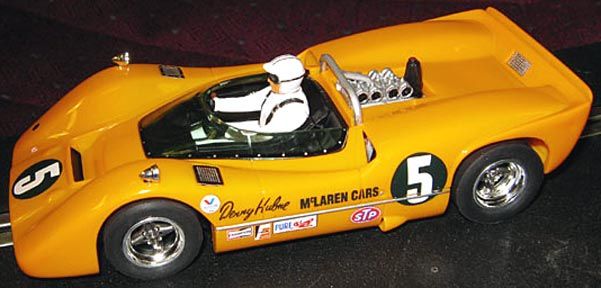
In stock at REH Distributors in Cincy.... the Revell 85-4838 McLaren M6.

Sunday, June 27, 2010

Jensen and Lewis build a McLaren

A funny McLaren video and a commercial worth watching.

Monday, June 7, 2010

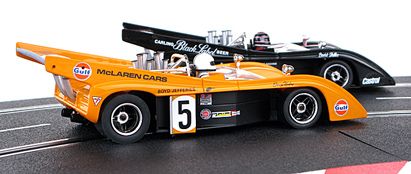
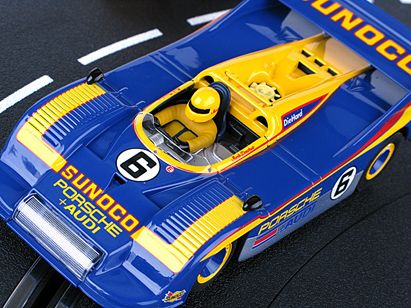
New Carrera McLaren Gulf and Porsche 917/30

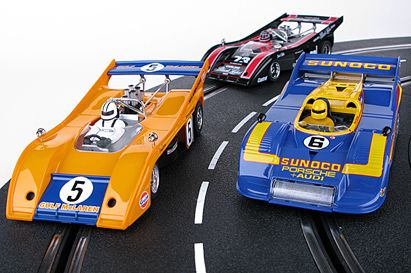
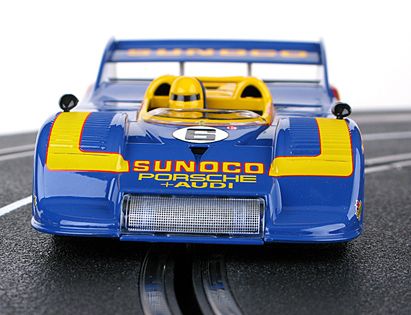
Photos of all 3 of the recently produced Carrera Cam Am's. The McLaren M20's and the Porsche 917/30 Sunoco driven by Mark Donohue.


Thursday, June 3, 2010

Mercedes-Benz McLaren Sports Cars SLR Stirling Moss

Bearing the namesake of legendary British racer Stirling Moss, the McLaren SLR Stirling Moss, will be making its big debut as the newest McLaren SLR variant amongst the automotive elite (and few entries from Kia) at the 38th Annual North American International Auto Show in Detroit this January.
Mercedes-Benz McLaren Sports Cars SLR Stirling Moss
Stuttgart– Mercedes-Benz and McLaren are adding the crowning glory to the model family of their highly successful SLR super sports car with a new, uncompromisingly spectacular car. There is neither a roof nor a windscreen to separate the driver and passenger from the outside world; they enjoy unadulterated high-speed excitement with all the attributes of a speedster.
The new SLR Stirling Moss is also characterised by the most sophisticated technology and a breathtaking design which reinterprets the SLR legend. With 478 kW/650 hp the SLR Stirling Moss accelerates its V8 supercharged engine from standstill to 100 km/h in less than 3.5 seconds, and has a top speed of 350 km/h – no other series-production car is at the same time so open and so fast.
This extreme concept makes the new high-performance sports car a legitimate bearer of the name of the British motor racing legend and Mille Miglia record-holder Stirling Moss, who drove the legendary Mercedes-Benz SLR racing cars from victory to victory during the 1950s.
A successful collaboration of engineering which is demonstrated far beyond the relatively ancillary exclusion of a windscreen, the SLR Stirling Moss is truly an equal celebration of McLaren’s both past and present. Thus in keeping with its status as a rare breed, production of the SLR Stirling Moss will be limited to only 75 units and, to further prevent your uncultured, peasant hands from touching it, each unit will be priced at a cool $1.04 million (€750,000).
This is why the modern-day version of the legendary SLR carries the additional words “Stirling Moss” in its name. As the new SLR Stirling Moss unites the character of the current SLR models with the fascination of the SLR of 1955. The core values of both the historical and the present-day SLR models include an exciting new design, innovative technology, high-class materials displaying perfect craftsmanship, and, above all: a unique driving experience for all the senses.
Whilst the 300 SLR earned its spurs on racing circuits the world over, the new member of the SLR family is not designed for the racetrack. Although it sets new standards in terms of technology, performance and excitement – just like its forebears – it is aimed at individuals who have exquisite requirements and nurture very special dreams.
Remaining totally true to the specifications of the 300 SLR, the new Silver Arrow’s equipment is extremely sophisticated and yet at the same time decidedly spartan, doing without both a roof and side windows. There are just two wind deflectors a couple of centimetres in height to protect the driver and passenger from the airflow. Two air scoops integrated into the bodywork serve as roll-over bars. With this extreme concept the new SLR Stirling Moss is visually very different from all the other vehicles which belong to the elite sports car class.
Just like the legendary racing vehicles of yesteryear, the SLR Stirling Moss dazzles with its superlative performance. Accelerating from zero to 100 km/h in less than 3.5 seconds and with a top speed of 350 km/h this puristic high-performance sports car denotes completely new dimensions in open-top driving. And not just because of the impressive performance figures; every time drivers take to the wheel of the SLR Stirling Moss their senses are addressed with a previously unheard of intensity, conveying a driving experience in its purest and most sensual form. This automotive thoroughbred thus facilitates the kind of open-air feeling that is utterly unique for a road-going vehicle.
Developers working on the Stirling Moss were able to fall back on a wealth of experience gathered when producing the SLR CoupĂ© and Roadster, in particular where the technical base was concerned, with its extravagant carbon-fibre design, high-performance suspension and throaty V8 engine. The common denominator uniting the Stirling Moss with the other members of the SLR family is the aerodynamic concept with a closed underbody and a diffuser in the rear bumper for maximum possible downforce at the rear axle – with one difference: the diffuser here is considerably larger than that on the coupĂ© and roadster.
The new SLR Stirling Moss is the kind of high-calibre speedster coveted by the sporting gentry and enthusiasts alike. At the same time it is a collector’s item which marks the pinnacle of an era and, for the foreseeable future, at least, the final curtain for the SLR. In May 2009 production of the SLR models will cease; only a total of 75 units of the Stirling Moss will be manufactured between June and December 2009, bearing chassis numbers from 1 to 75. Not only does this exclusive vehicle represent the conclusion of the current SLR family; it also serves as a very special thank you to the most loyal of SLR customers, for they are the only ones able to acquire a Stirling Moss.

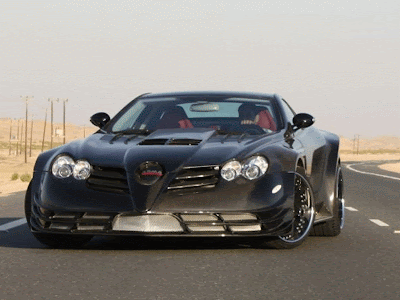
Mercedes McLaren Sports Cars ASMA Design Perfectus SLR 722

ASMA Design have modded the Mercedes-Benz McLaren sports cars SLR 722 to their specifications. The new ASMA Design Perfectus SLR 722 is totally redone with new aggressive custom carbon fibre bodywork and 20-inch wheels.
Mercedes McLaren Sports Cars ASMA Design Perfectus SLR 722
The original SLR only made 650-hp from the 5.4-litre supercharged V8, but this was not enough for ASMA Design, as they have upped the power to 750-hp, and this allows the ASMA Design Perfectus SLR to get from 0-100km/h in only 3.5 seconds, and then go onto a top speed of 216mph.
Making claims of perfection is a dangerous thing to do, especially in the exclusive and demanding world of supercar tuning. But there is one man who can actually make this claim of perfection, and even go as far as to name his incredible automotive creation Perfectus. And this Designer is Erturul ASMA and this is his amazing, all carbon fiber ASMA Mercedes McLaren SLR 722.
Carbon is the customizing material of choice for hardcore tuners alike, but until the unveiling of Perfectus, no-one had truly used this most beautiful and powerful material to its full and awe-inspiring effect. But, as these stunning pictures can only prove, Erturul ASMA has taken the McLaren to entirely new levels of automotive theatre. In fact, thanks to Perfectus, you can forget about the world of top-end tuning here on Earth, and now, and only now, think in terms of an awesome new age of carbon customization.
Wide arch at over 2-metres in total width, with over 10cms of super-phat and super-sculpted carbon over each of the one-off ASMA rims, rims that are also mind-blowing in their dimensions. How does 325-25-20 out the back and 255-30-20 up front grab you? Hard! And once this stunning carbon design grabs you, it will never let you go.
The wide ‘n’ wild completely custom carbon fiber bodywork is simply unmatched and unbeatable, anywhere in the world. Sharp, extra-aggressive F1-inspired bodylines take this SLR to whole new levels of road-presence; this SLR is always in full attack mode, making 700hp to back-up the ASMA Design styling.
Only Erturul ASMA can make and prove his claims of perfection, but he must also apologize… apologize to all the owners of standard SLRs everywhere, for there can be only one Perfectus.

Thursday, May 6, 2010

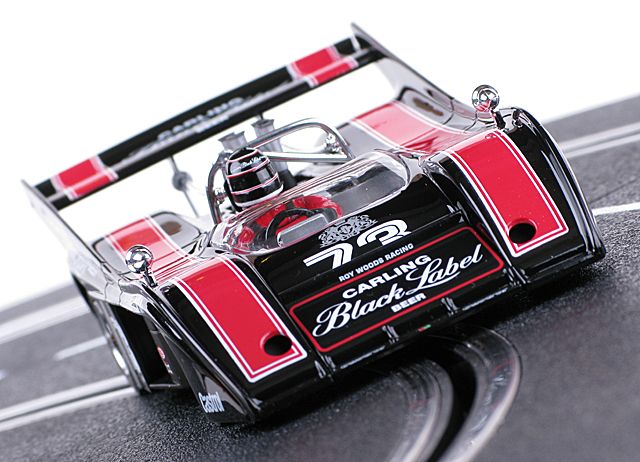
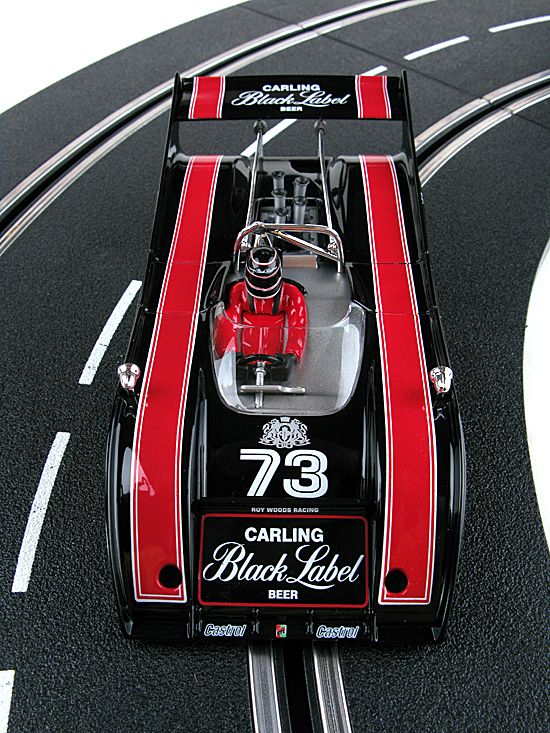
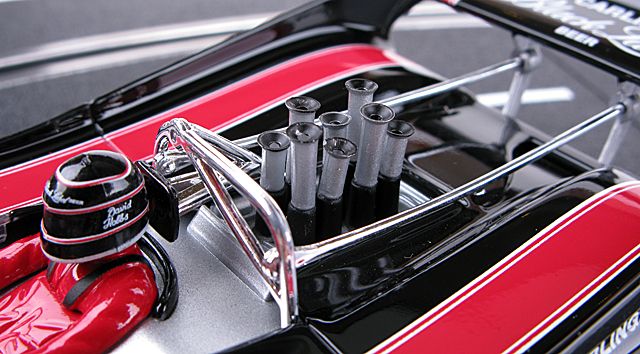
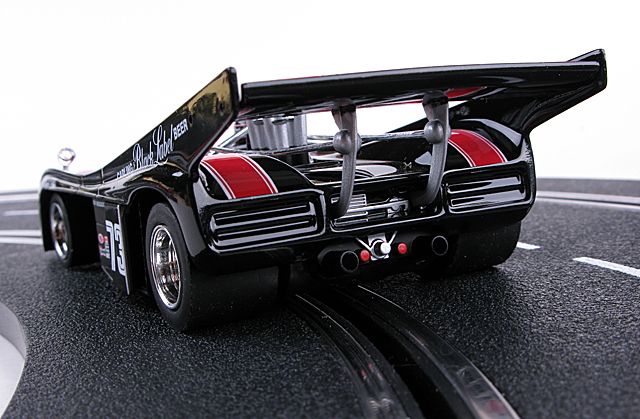
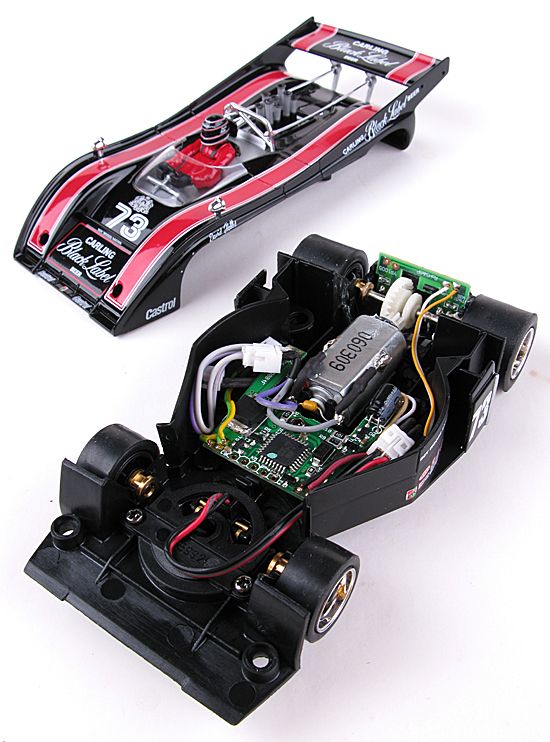
New Carrera McLaren M20-Black Label

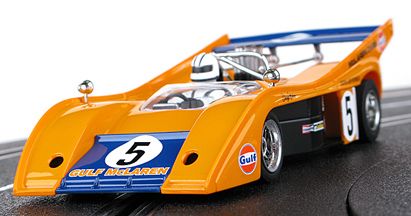
Photos of the new Carrera M20 McLaren. Coming soon to the North American market.


Related Posts Plugin for WordPress, Blogger...